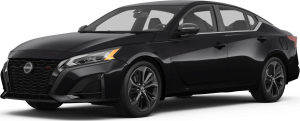

A practical guide to maximizing fuel efficiency in the 2026 Nissan Altima during city driving. Learn how tire pressure, transmission tuning, Eco Mode usage, smooth acceleration habits, air filter maintenance, cargo management, and regular service checks work together to help drivers achieve the EPA-rated 26 mpg city figure on Broad Street's stop-and-go routes.
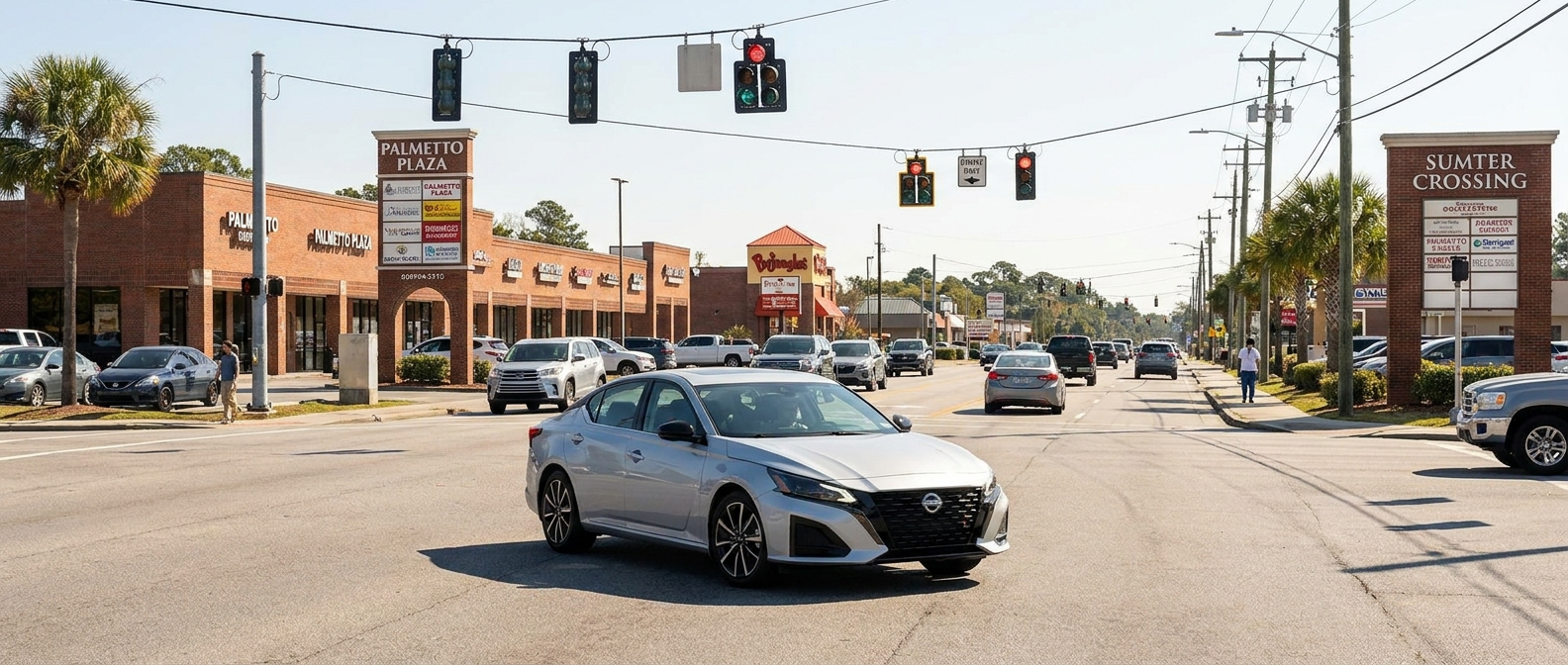
Broad Street isn't a highway. It's a string of signals, parking-lot cuts, and lunch-rush backups running the length of Sumter, and every one of those stops costs you fuel. The good part is that the 2026 Nissan Altima is genuinely built for this kind of driving. The EPA rates the FWD Altima at 26 mpg city and 30 mpg combined on regular-grade fuel. Building it for the job and actually hitting that number are two different things, though. This checklist gives you the seven habits and maintenance items that protect that city number on the real road.
What Goes on Your Broad Street Fuel Savings Checklist?
Seven items go on this checklist, and every one earns its place with a real, testable reason, though a couple of them matter far more in stop-and-go traffic than they ever do out on the open highway, so treat this as a priority list rather than a set of equals. Check them off before the school year ramps up and the corridor gets busier.
Your 2026 Altima Fuel Savings Checklist
- [ ] Confirm tire pressure is in the 32-36 psi range
- [ ] Choose FWD trim if AWD isn't serving a real need in your driving
- [ ] Use Eco Mode during stop-and-go Broad Street segments
- [ ] Engage gradual acceleration off every signal (let the CVT do its job)
- [ ] Check the engine air filter (replace if it's been more than 15,000-20,000 miles)
- [ ] Clear unnecessary cargo weight from the trunk and back seat
- [ ] Schedule a service check if your mpg has dropped noticeably without explanation
That's the quick version. The rest of this post is the why behind each line.
Why These Seven Items Actually Matter
Tires come first here, because they're the easiest thing to get wrong and one of the quietest sources of wasted fuel, and unlike the other six items on the list, you can check them in about two minutes with a gauge before you ever pull out of the driveway.
On Broad Street, Keeping your Altima's tires at the correct pressure matters more than it does on the highway. At highway speeds, rolling resistance is a smaller fraction of your total fuel draw. In stop-and-go driving, it's a much bigger slice. Nissan's guidance for the Altima puts the target range at 32 to 36 psi (check the driver's door jamb label for your specific trim's spec, not the max number on the sidewall). Underinflated tires create extra friction with the pavement, and the engine burns more fuel to compensate. Checking this one is free and takes two minutes.
FWD versus AWD is the tradeoff this article won't dodge. According to the Nissan press kit, the FWD Altima earns 26 city / 36 highway / 30 combined on regular fuel. The AWD version earns 25 city / 33 highway / 28 combined, one less city mpg and three fewer highway mpg. AWD burns more fuel, and there's no way around it. Over a year of Broad Street commuting, that gap accumulates. Sumter sits in the SC Midlands, where we don't get the sustained ice or snow that makes AWD a real safety tool for most weeks of the year. If you're choosing between the two trims primarily for daily Broad Street driving, FWD is the more efficient fit for this climate. (AWD earns its keep if you're regularly running to the mountains or pulling off-road weekend shifts.)
The Xtronic CVT transmission is doing a lot of work on your behalf at every traffic light, and it's easy to miss. Unlike a conventional automatic that steps through fixed gears, the CVT keeps engine RPM in its most efficient range continuously. When you accelerate smoothly off a signal on Broad Street near the Sumter Mall, the CVT holds a low RPM and lets the 2.5-liter engine work efficiently. Hammer the throttle and it raises RPM to find power, so you burn more fuel. Smooth, gradual acceleration is literally how this transmission was designed to function.
Eco Mode is a real function. It softens the throttle mapping, which makes it easier to hit smooth, CVT-friendly acceleration even if your right foot isn't perfectly calibrated. We'd leave it on for most Broad Street runs. Switch it off when you need confident merging onto US-378 outbound toward Shaw AFB or pulling into a fast-moving left turn.
The air filter is the easiest item on this list to let slide, and a clogged one restricts airflow to the combustion chamber and forces the engine to work harder for the same output. If your Altima has run 15,000 to 20,000 miles on the same filter in SC Midlands humidity and pollen, have it looked at, since the inspection is quick and replacement is an inexpensive fix if needed.
| Checklist Item | Why It Matters on Broad Street |
|---|---|
| Tire pressure (32-36 psi) | Low pressure increases rolling resistance in stop-and-go driving |
| FWD trim choice | EPA shows FWD earns 1 mpg more city and 3 mpg more highway than AWD |
| Eco Mode on | Softens throttle, makes smooth CVT-friendly acceleration easier |
| Smooth acceleration | CVT keeps RPMs low only when you give it steady, gradual input |
| Air filter check | Restricted airflow forces the engine to burn more fuel for the same power |
| Reduce cargo weight | Extra pounds mean extra load on every acceleration from a standing stop |
| Service flag for mpg drop | Unexpected drops often signal a fixable maintenance issue |
Because every stop on Broad Street asks the engine to accelerate a full load from rest, cargo weight comes down to straightforward physics. If your trunk is carrying gear that doesn't need to be there, it's costing you on every traffic-light restart. Clear it out.
The last item matters most if you've noticed your mpg quietly declining. The Altima's onboard trip computer is a useful reference. If your average has dropped without any obvious cause (longer city-heavy routes, more A/C use), that often signals something fixable, like an air filter, tire pressure drift, or a service item that's past due. Browse our available Altima inventory if you're at the stage of weighing whether it's time to upgrade instead of maintain.
Schedule an Altima Service Check
Your Print-and-Go Recap Before the Next Tank
All seven items work together, and no single one carries the whole load, though tire pressure and smooth acceleration probably do the most for your daily number on a corridor this stop-heavy, so the recap below keeps them all in one place. The Nissan press kit rates the 2026 Altima FWD at 30 mpg combined and 26 mpg city. That city number is what matters most for Broad Street driving, and it's achievable when the car is maintained and driven the way the CVT was designed to be driven. The Nissan Sentra earns slightly higher city ratings if pure commuter efficiency is your only priority, but the Altima gives you the roomier cabin and more standard features without sacrificing much at the pump.
The print-and-go version of the checklist looks like this.
- Tire pressure: 32-36 psi, checked monthly
- FWD vs AWD: honest assessment of whether AWD earns its 2-3 mpg cost in your real routes
- Eco Mode: on for Broad Street, off for fast merges
- Smooth acceleration: let the CVT find its efficient range off every signal
- Air filter: inspected every 15,000-20,000 miles in our SC pollen and humidity conditions
- Cargo: cleared of anything that doesn't need to be there
- Mpg drop: flagged early and brought in for a service look before a small issue becomes a big one
We're at 2600 Broad St, right in the middle of the same corridor you're already driving. If you want to talk through trim choices, check what's in stock, or bring your Altima in for a service visit, our team is here.
Frequently Asked Questions
Does the 2026 Nissan Altima really get 30 mpg in Sumter stop-and-go traffic?
The EPA rates the FWD 2026 Altima at 30 mpg combined, but that figure blends city and highway driving. The city-only rating is 26 mpg. On a stop-heavy corridor like Broad Street, with signals and parking-lot cuts, expect to land closer to that 26 city figure most days. You can protect that number with correct tire pressure, smooth acceleration, and Eco Mode on, but you won't consistently beat the city rating in dense urban stop-and-go. The combined 30 reflects real-world mixed driving, and Sumter commuters who also log some highway miles on US-378 to Columbia will see averages closer to that mark over time.
Does AWD hurt the Altima's fuel economy, and is it worth it for Sumter driving?
Yes, AWD does cost fuel economy. According to Nissan's official press kit, the AWD Altima earns 25 city / 33 highway / 28 combined on regular fuel, compared to 26 city / 36 highway / 30 combined for the FWD model. The gap is a real one mpg city and three mpg highway. For Sumter and the SC Midlands, where sustained ice or snow is rare, a daily Broad Street commuter won't often find AWD earning back that efficiency gap through traction. If your driving includes regular trips to the upstate, the mountains, or frequently wet rural roads, AWD is a legitimate consideration. For a strictly local Sumter daily driver, FWD is the more efficient choice.