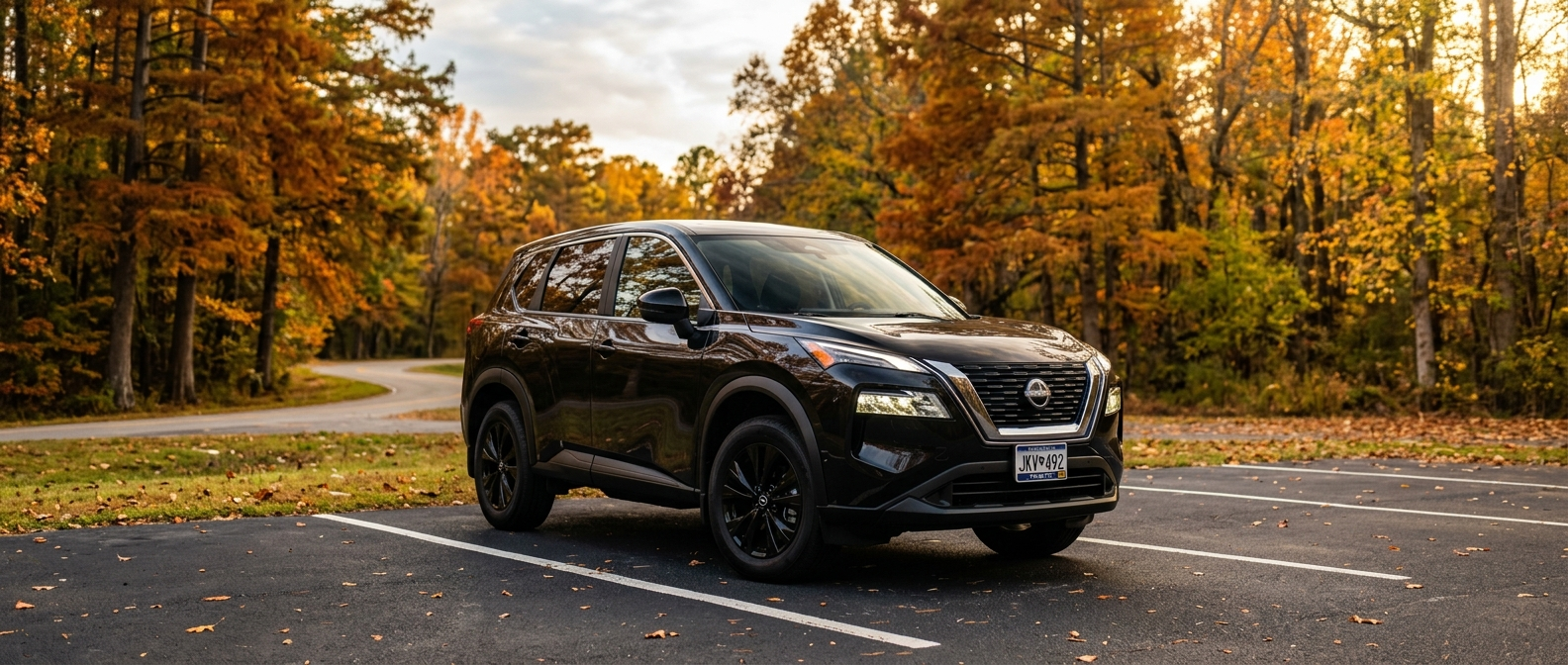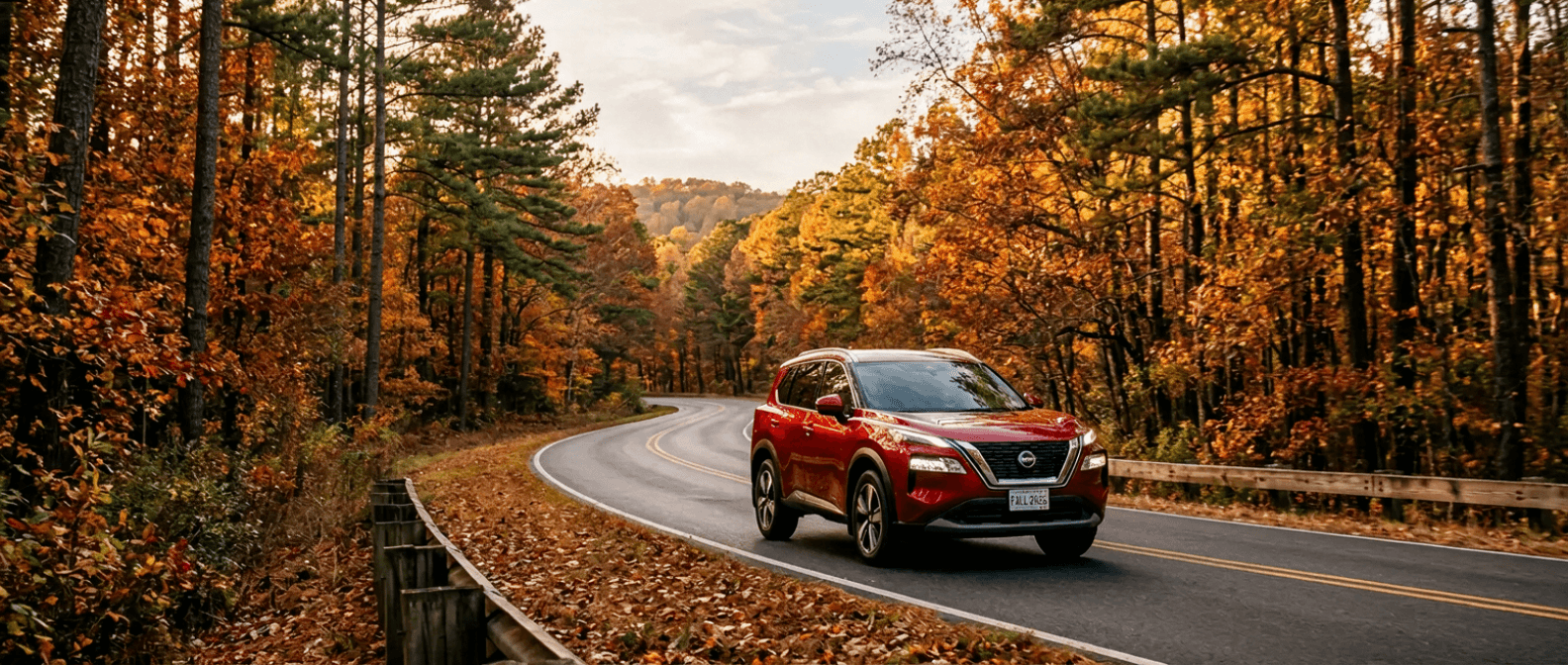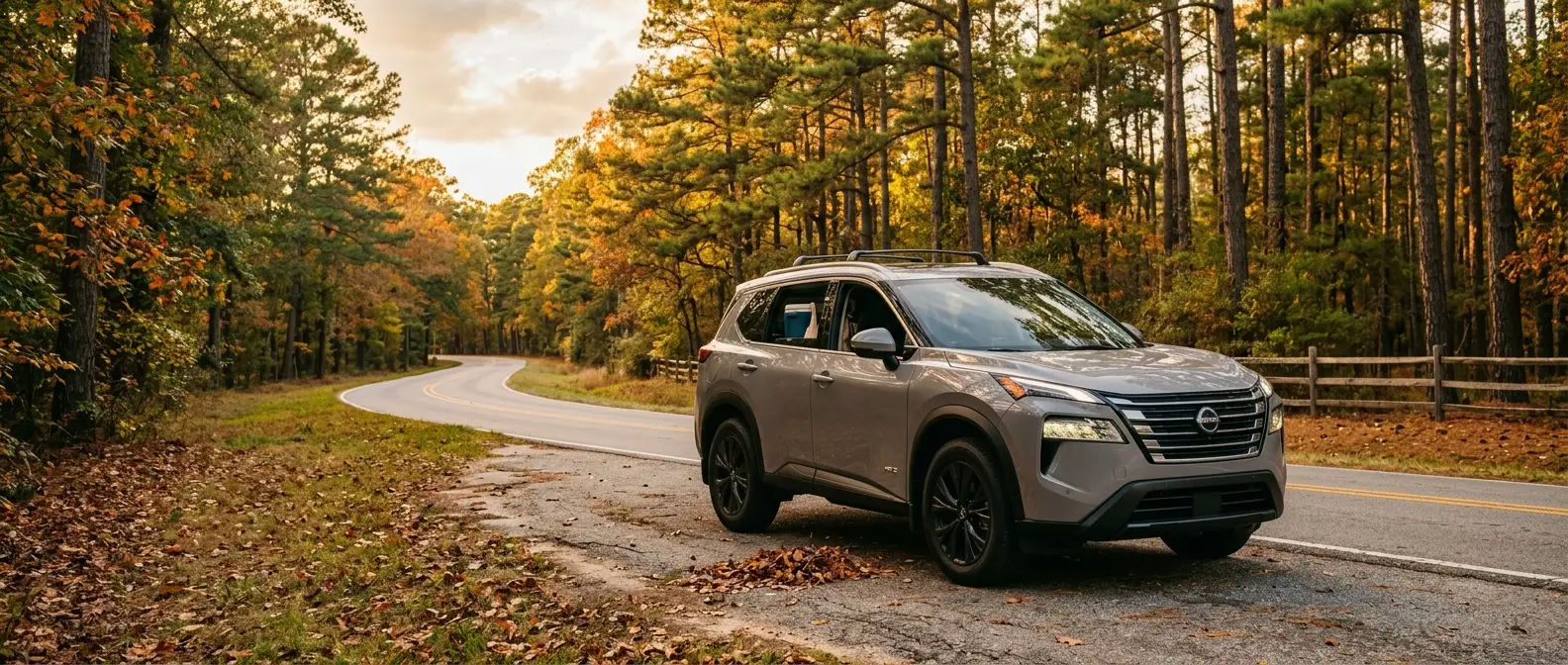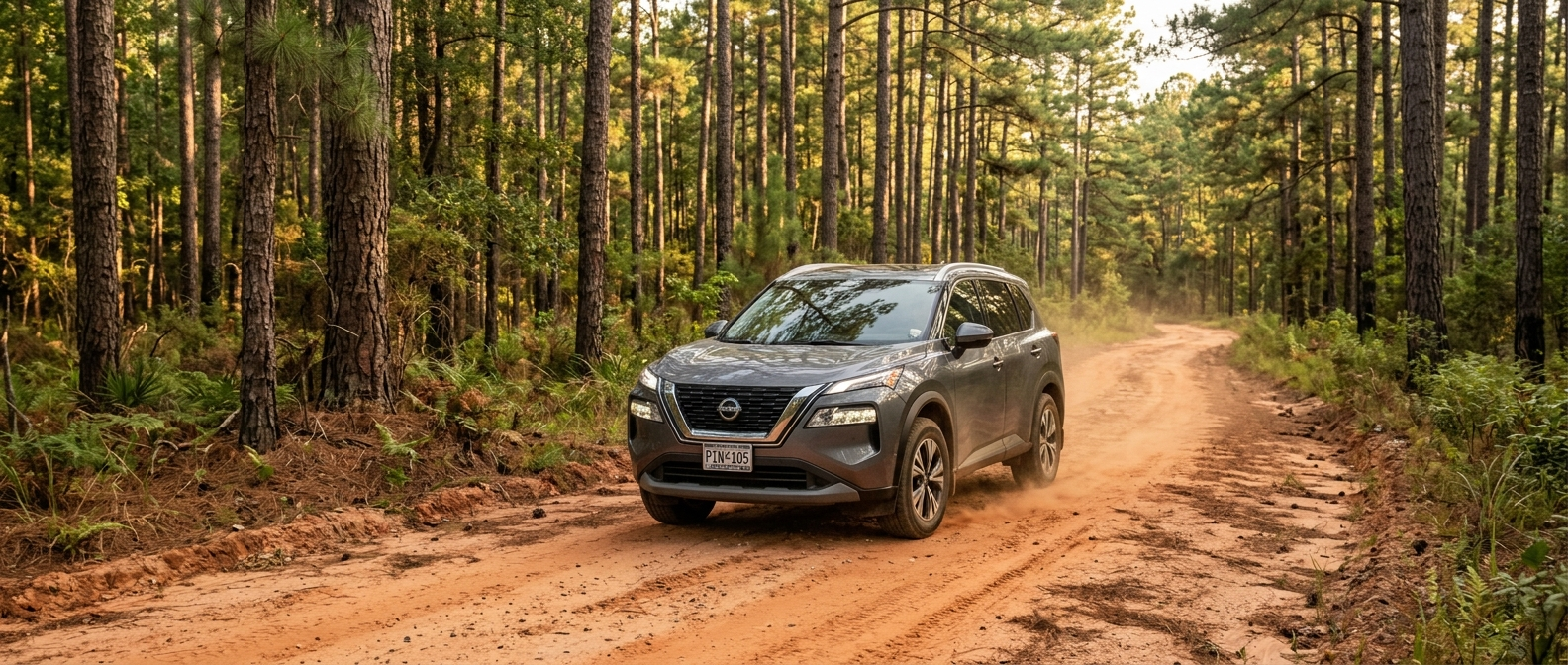

Back-to-School Car Shopping in Sumter: Which Nissan Fits Your Situation
A guide to matching a new Nissan with back-to-school transportation needs in Sumter. Learn how the 2026 Sentra, Kicks, and Rogue each address different buyer situations, from first-time drivers to families managing school logistics. Discover why the Sentra's IIHS TOP SAFETY PICK+ rating matters for young drivers and how to prepare any vehicle before semester starts.
August in Sumter hits two ways at once. The humidity stays relentless, and families are sorting out the car situation before the school year locks in. We see it play out on our lot every August. A parent who needs a first car for a teen driver. A family fresh off a PCS to Shaw Air Force Base with one vehicle and kids starting school next week. A commuter who's been putting off replacing a high-mileage car and now faces a hard deadline. The 2026 Nissan lineup covers all of those situations, though the right fit depends on who's driving, where they're going, and what the budget actually looks like.
The 2026 Nissan Sentra is where we'd start for most student and first-car buyers, and the reason is more concrete than you'd expect.
Match the Car to the Buyer: A Back-to-School Decision Table
Pick the row that matches your situation and read across to the tradeoff, because the best fit here depends less on the badge than on who drives the car and where it goes, and every option below carries a real cost against a real benefit. The tradeoffs are honest ones.
Buyer Situation
Best Fit
The Honest Tradeoff
Teen or first-time driver
2026 Sentra
Tighter cargo room than a crossover; significantly stronger safety rating
Bigger vehicle, higher monthly; Nissan lists 74.1 cu ft of cargo space with seats folded
Military family, one car, school plus daily errands
2026 Kicks or 2026 Rogue
Kicks is nimble in town; Rogue handles the bigger logistics load
Tightest budget for a new car
2026 Sentra
Least flexible on cargo, but the safety credentials are the strongest in its segment right now
None of these is a wrong answer for the wrong buyer. The 2026 Sentra is the safest compact in its price tier we've seen in years. A Rogue carries more and costs more. In the middle sits the Kicks, doing both jobs reasonably well. None of that is a cop-out, just the actual shape of the decision.
Why the Safety Spec Is the One Back-to-School Number That Matters
The safety rating is the number we'd weigh first for any car headed to a young driver, ahead of MPG or cargo, though that priority naturally shifts once you're past the new-driver years and fuel or space carries more weight for the household. Parents tend to look at MPG and cargo first. We'd flip that order for a new or young driver.
The IIHS awarded the 2026 Sentra its TOP SAFETY PICK+ designation, which is the institute's highest honor. To earn it, a vehicle must score "Good" (the top rating) on all three crash tests, meaning small overlap front, moderate overlap front, and side impact. Per the IIHS, the 2026 Sentra passed all three. It marks the first Sentra ever to earn the Plus designation. Every trim comes with Nissan Safety Shield 360 as standard equipment, which includes Automatic Emergency Braking with Pedestrian Detection, Blind Spot Warning, and Rear Cross Traffic Alert. Ten airbags are standard across the lineup.
The 2026 Sentra is the first Sentra in the nameplate's history to earn the IIHS TOP SAFETY PICK+ (and that designation comes standard, not as an option).
For families, the 2026 Rogue carries an IIHS TOP SAFETY PICK designation and the same Safety Shield 360 suite standard. Does the blind-spot tech actually earn its keep on a commute? On the multi-lane sections of US-378 and US-521 heading out of Sumter, yes, and we notice that feature when customers who drive those corridors ask what technology is running in the background.
One honest caveat sits behind the safety ratings. They assume a new vehicle in current condition.
If you're handing down a used car for a student, the same tech may not be present, or it may need a calibration check. That matters.
On fuel costs and the US-378 commute: The EPA rates the 2026 Sentra at up to 40 mpg highway on the S and SV trims. A student commuting from Sumter to a Columbia campus covers roughly 45 miles each way. US-378 connects Sumter to Columbia. A gap between a 40-mpg car and a 28-mpg car is tangible on a student fuel budget. The EPA rates the 2026 Kicks at 31 mpg combined and 35 mpg highway (FWD). Both run on regular unleaded. Neither requires premium fuel, which matters for a student managing their own costs for the first time.
Pre-Semester Vehicle Check: Five Steps Before the First Day
Run this five-point check before the first day whether you're buying new, buying used, or handing down a family vehicle, since the same late-summer conditions in the Midlands stress tires, batteries, and cooling systems regardless of how the car came to you. A quick pass now beats a warning light mid-semester.
Tire pressure and tread. South Carolina's late-summer thunderstorms come fast. Worn tread on wet pavement is the one condition we'd fix first, no debate.
Battery load test. A visual check isn't enough after a summer of light use. A proper load test tells you what you're actually working with.
Coolant level and condition. Sumter's August heat is hard on a cooling system that hasn't been topped off. Don't skip this one.
Safety system function check. If Safety Shield 360 is on the vehicle, confirm the cameras and sensors are clear and calibrated.
Multi-point inspection. Let our service team go through the car before the semester starts rather than after a warning light shows up mid-semester.
The Short Answer for Sumter Back-to-School Shoppers
For a new driver headed to school locally, the Sentra's IIHS safety rating and 40 mpg highway make it the practical answer, while a family running kids to activities and hauling gear on weekends will land on the Rogue and its 74.1 cubic feet of cargo space (seats folded, per Nissan). Somewhere in between, the Kicks earns a serious look.
Start with financing so you know your real number before you walk the lot. One step like that saves a lot of back-and-forth.
“The Car’s Been Fine All Summer” Is the Myth That Strands Sumter Families in August
A summer of smooth driving doesn't guarantee your Nissan is ready for back-to-school season. Learn why August heat stress accumulates silently in batteries, tires, and cooling systems, and how Sumter's Midlands climate makes a pre-carpool inspection essential before the first bell rings.
A Nissan that ran quietly through June and July isn't necessarily ready for carpool season. A summer of easy driving tells you very little about the weeks ahead. That distinction matters more in the South Carolina Midlands than almost anywhere else, because August here is when a summer's worth of heat stress decides to collect its bill.
We hear some version of this at Nissan of Sumter every season. "It's been running fine, so I figured we were good." We get it. But the specific conditions in Sumter in late summer (the humidity, the stop-and-go school-zone traffic about to begin, the batteries and tires that soaked up months of heat) make that assumption the one most likely to cost you a morning.
The published data and our own time in the service bay tell a consistent story.
The short version
The myth: a smooth summer means your Nissan is school-ready. The reality: August heat is the damage season, and back-to-school week is when it surfaces.
AAA reports that for every 10-degree Fahrenheit rise in temperature, tire pressure increases by approximately 1 PSI. A Sumter August afternoon can push tires into the overinflated range before you leave the neighborhood.
Heat accelerates battery chemical breakdown. A battery that started fine on every July morning may not have the reserve capacity for the first cool September start.
Nissan's published maintenance schedule specifies oil and filter service every 5,000 miles or 6 months for the 2026 Rogue, whichever comes first. Many Sumter families hit that 6-month mark right at back-to-school time.
The honest tradeoff: not every car needs every item. Your owner's manual and a quick multi-point check together tell you exactly what does.
Is "Running Fine All Summer" Really a Good Enough Reason to Skip the Check?
No, and the reason is specific to where and when you're driving, because Sumter's spot in the SC Midlands means August delivers sustained heat, high humidity, and afternoon thunderstorms that drop hard rain onto pavement baking above 130 degrees. Together they stress three systems at once. Your battery, your tires, and your cooling system all take the hit, and none of them announce a problem until they've already become one.
The back-to-school transition also drops stop-and-go school-zone traffic on a vehicle that spent the summer on longer, faster drives. Brake pads wear differently in short-stop cycles. Wiper blades that skated through dry weeks meet the first rainy September morning with cracked rubber. A school-run car is a different machine than a summer road-trip car, even if it's the same vehicle parked in the same driveway.
The Claim
What's Actually True
Source
"It ran fine all summer, so it's ready now."
Heat is the damage season. Stress accumulates silently and shows up when load increases at carpool season.
AAA automotive safety data
"I don't need an oil change, I haven't hit 3,000 miles."
Nissan specifies oil and filter service every 5,000 miles OR 6 months, whichever comes first. The calendar triggers service even when mileage is low.
Nissan USA maintenance schedule, 2026 Rogue
"Tires look fine to me."
AAA reports heat raises tire pressure approximately 1 PSI per 10-degree Fahrenheit increase. Visually normal tires can be overinflated in Midlands summer heat, concentrating wear and reducing wet grip.
AAA; NHTSA (correct pressure = cold-inflation PSI on driver-side door jamb)
"The battery just needs a jump if it fails."
Heat accelerates the chemical reactions that degrade battery reserve capacity. A battery weakened in August may fail a cool September start entirely, not just slowly.
AAA
"Synthetic oil means I can skip a cycle."
Synthetic oil extends intervals, but Nissan's published schedule for the 2026 Rogue (0W-20 synthetic) is still 5,000 miles or 6 months. Time matters as much as miles.
Nissan USA (0W-20 specification for the 2026 Rogue 1.5L VC-Turbo engine)
"I'll wait until something actually goes wrong."
Brake inspections, cabin air filters, and wiper blades degrade on time and use, not on failure events alone. Nissan schedules brake inspections at every 5,000 miles or 6 months.
Nissan Rogue published service intervals
The 2026 Nissan Rogue is the vehicle we see most often when Sumter families come in for a seasonal check. The same intervals and the same Midlands-heat logic apply across every model on our lot.
What Sumter's August Climate Actually Does to Your Nissan
Sumter's August climate wears down your battery, tires, and coolant while the car still starts and drives like nothing's wrong, which is exactly what most generic back-to-school checklists gloss over. They'll tell you to check your battery. They don't explain why August is the month that check matters most.
Heat degrades batteries in a way cold weather rarely matches for sheer accumulated damage. AAA reports that extreme heat accelerates the chemical reactions inside a battery, degrading its reserve capacity. A battery in healthy shape in May may have slipped to a borderline state by late August. It starts the car. It starts it again. Then a slightly cooler September morning arrives and the reduced capacity becomes a no-start at 7:15 a.m., on the first day of school.
Tires carry a parallel story. AAA puts it at approximately 1 PSI for every 10-degree Fahrenheit rise in temperature. On a Sumter afternoon pushing into the mid-90s, that effect is real and measurable. Over-inflation concentrates wear on the center tread and shrinks the tire's contact footprint on wet pavement. Then the afternoon thunderstorm rolls in on US-521 during school pickup.
The Nissan Pathfinder is a vehicle plenty of Sumter families rely on for exactly those school and activity runs. It carries three rows of people and a Midlands summer's worth of accumulated thermal stress on its battery and tires, same as anything else on the road.
Per NHTSA, correct tire pressure is the vehicle manufacturer's recommended cold-inflation pressure, found on the driver-side door jamb label or in the owner's manual. Check tire pressure when tires are cold, before the day's driving raises the reading.
Nissan's 6-month maintenance interval falls right at back-to-school time for most families who last serviced in February or March. The calendar triggers service whether or not the odometer has moved far enough.
The Real Checklist: What Your Nissan Needs Now vs. What You Can Defer
Some of these jobs are due right now and others can safely wait, and telling the two apart is what matters most here, since lumping urgent and deferrable items together creates two separate problems. Folks overspend on services that aren't due, or they skip things that genuinely matter. Neither outcome serves you well.
What Nissan's published schedule requires at every 5,000 miles or 6 months (current models including the 2026 Rogue):
Engine oil and filter change (Nissan specifies 0W-20 synthetic for the 1.5L VC-Turbo Rogue)
Tire rotation
Brake inspection (pads, rotors, steering and suspension components, exhaust system check)
What Sumter's August conditions warrant checking regardless of mileage:
Battery load test (heat degradation is cumulative and does not appear on an odometer)
Tire pressure and tread depth (reference the cold-inflation PSI from the door jamb, not the tire sidewall)
Cabin air filter (humidity and pollen clog filters faster in SC than in drier climates)
Wiper blades (summer heat cracks the rubber; the first fall rain reveals it)
Coolant level (fluid breakdown accelerates in sustained heat, per AAA)
What you can defer if it is not yet due:
Transmission fluid (Nissan specifies 20,000-mile intervals on most current AWD Rogue models)
Engine air filter (check the condition, replace only if the owner's manual mileage warrants it)
Spark plugs (interval varies by model; confirm with your service advisor rather than guessing)
The point isn't to spend money on everything at once. It's to know the difference between a calendar-driven item and a heat-specific item. Both categories are legitimate. Both matter in late August in Sumter.
So What Should You Actually Do Before the First Bell?
Before the first bell, run two quick reads of your owner's manual and one look at the battery and tires, and you'll know exactly where you stand instead of guessing on a busy school morning. Open the maintenance schedule and check your current mileage and the calendar date against your last service entry. If either the mileage or the 6-month mark is close, schedule service now, before school-year mornings make it hard to find a free hour.
Check the battery and tires no matter what the odometer says. Both respond to Sumter's climate on a different clock than the maintenance schedule. A battery load test takes a few minutes and gives you a definitive answer. A tire check takes even less. Knowing where both actually stand beats a hopeful guess on the first day back.
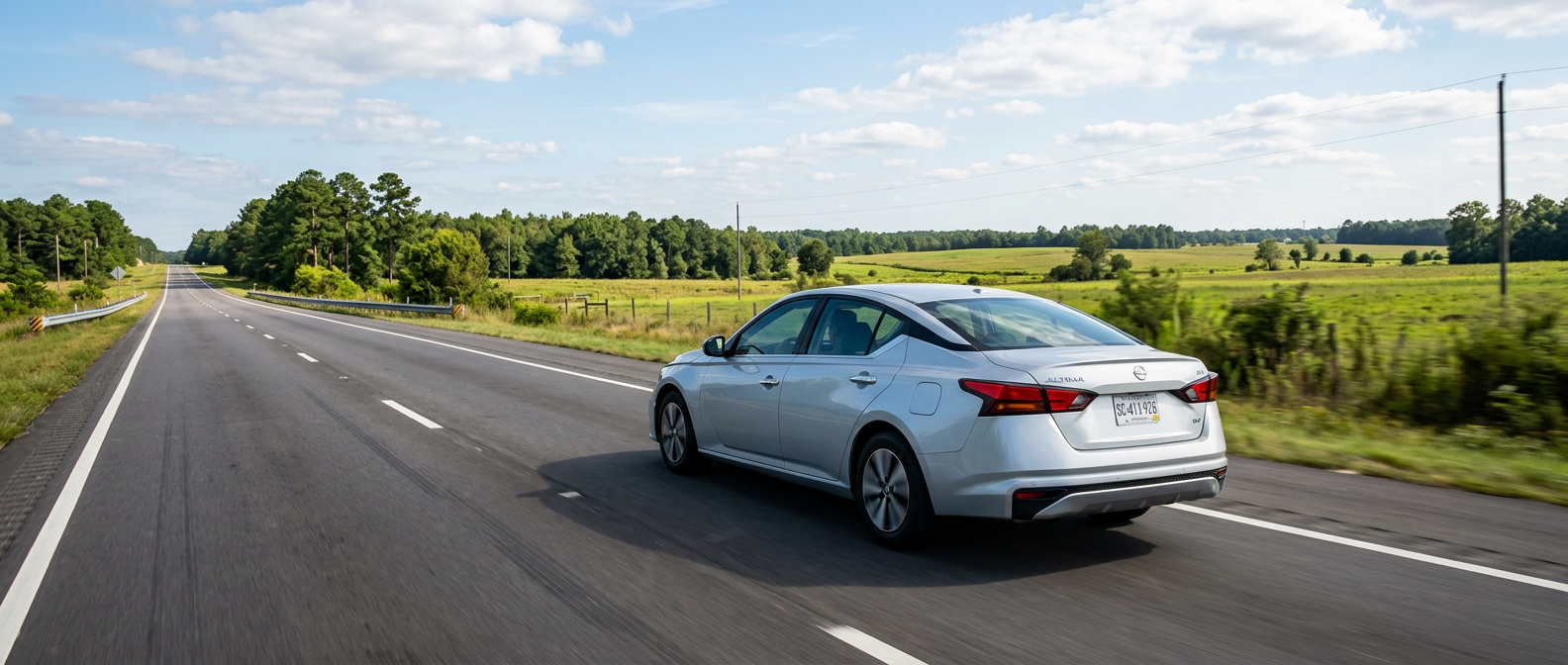
Think of the Nissan Altima on the daily US-378 commute to Columbia, the Kicks doing school drop-offs across town, and the Sentra a first-time driver just inherited for the semester. They all benefit from the same 30-minute look before the year gets busy. Not because something's obviously wrong. Because August in the Midlands is when quietly accumulating problems finally announce themselves, and you get to decide whether that happens in our service bay or on the side of the road.
By the Nissan of Sumter Team | August 2026
Frequently Asked Questions
Does my Nissan need service if it hasn't hit 3,000 miles since the last oil change?
Possibly yes. Nissan's published maintenance schedule specifies oil and filter service every 5,000 miles OR 6 months for the 2026 Rogue, whichever comes first. If 6 months have passed since your last oil change, the interval is due regardless of how far the odometer has moved. The time-based trigger exists because engine oil degrades from heat exposure over time, not only from mileage.
How does Sumter's summer heat specifically affect my Nissan's battery?
Heat accelerates the chemical reactions inside a car battery, degrading its reserve capacity faster than cold weather does. A battery that started your vehicle reliably through July and August may have lost enough capacity that a slightly cooler September morning exposes the weakness as a slow crank or a no-start. AAA recommends testing any battery that has been through a hot summer, especially one more than three years old. A load test at our service department tells you where yours stands before a school morning does it for you.
Nissan Rogue by Model Year: The Family Safety Buying Guide for Sumter School-Year Driving
A practical guide to choosing a used Nissan Rogue for school-year driving in Sumter. Learn which model years deliver the full Safety Shield 360 suite standard across all trims, how to identify open recalls that matter most for families, and whether a 2024, 2023, or 2022 Rogue makes sense for your budget and safety priorities.
Shopping a used Rogue right now because the school year just kicked back in? We'll give it to you straight up front. Any third-generation Rogue from 2021 onward puts full Safety Shield 360 on every trim level, including the base S. That marks the dividing line. A pre-2021 Rogue may have some of those features, but they weren't guaranteed across all trims. Buy 2021 or newer and you know what you're getting the moment you open the door. The question that follows is which year within this generation gives you the best combination of safety hardware and clean recall history for a family running school routes on Broad Street and US-378.
We sell and service Rogues at Nissan of Sumter, and we've watched this generation evolve since the redesign. What follows is what we know, generation year by generation year.
The short version
Sweet spot for used buyers: 2024 Rogue (strong safety suite, Google Built-in, fewest recalls in the generation)
Solid runner-up: 2022 Rogue (upgraded VC-Turbo engine, full Safety Shield 360, good value)
2021 is workable. Confirm every open recall is closed, especially NHTSA 26V-080
2023 is the year to approach carefully: five NHTSA recalls, including seat belt pretensioners and the engine bearing campaign
The 2026 Rogue (new on our lot) earned a 2025 IIHS Top Safety Pick with updated side curtain airbags. It's the benchmark to compare used options against
Every used Rogue purchase: run the VIN on NHTSA.gov before you negotiate
Which Rogue model years hit the safety sweet spot?
The 2024 Rogue is the strongest used buy in this generation for a Sumter family focused on school-year driving, and the case is straightforward. It carries the full Safety Shield 360 suite standard on every trim and added Google Built-in navigation, so you get real-time routing without juggling a phone mount and cable on the carpool run. NHTSA data shows only two recalls, the lowest count of any third-generation year through 2024. That matters in practice. Fewer open remedies mean less homework before you hand the keys to whoever's doing morning drop-off.
Approach carefully because most recalls in the generation
2024
Yes, all trims
1.5L VC-Turbo, 201 hp
2 recalls
Sweet spot
2025
Yes, all trims
1.5L VC-Turbo, 201 hp
Minimal
Strong choice with limited used supply yet
2026 (new)
Yes, all trims (updated airbags)
1.5L VC-Turbo, 201 hp
None (new)
IIHS Top Safety Pick benchmark
According to Nissan's own press release for the redesign, the 2021 Rogue was the first year to feature Safety Shield 360 as standard equipment across the entire lineup. The suite bundles six active safety technologies: Automatic Emergency Braking with Pedestrian Detection, Blind Spot Warning, Rear Cross Traffic Alert, Lane Departure Warning, High Beam Assist, and Rear Automatic Braking. For school-zone driving in Sumter (where kids on foot cut between parked cars and the carpool line stops without warning), Pedestrian Detection does the work that matters most, and from 2021 on it comes on the base S trim.
The 2022 jump is also real. Nissan swapped the 2.5-liter four-cylinder for a 1.5-liter VC-Turbo producing 201 horsepower and 255 lb-ft of torque. More torque at low speeds translates to smoother, more controlled acceleration in stop-and-go school zones. Call it a genuine safety argument, not just a spec to quote.
Which Rogue years should you watch out for?
The 2023 is the year we'd approach with the most caution, because it carries the heaviest recall load in the generation and two of those campaigns hit close to home for a family buyer. NHTSA records list five recalls for it, the highest count in the third generation. Two stand out for a family buyer. A seat belt pretensioner recall (incorrectly manufactured pretensioners that may not properly restrain occupants in a crash) and a powered driver seat recall on certain trims (seat frame welds may detach from the rear inboard bracket). Those aren't cosmetic issues. A 2023 that's had both remedies completed at a dealer is a very different vehicle than one that hasn't. The paperwork matters.
The engine bearing recall (NHTSA campaigns 25V-437 and 26V-080) covers certain 2021 through 2024 Rogues equipped with the 1.5-liter or 2.0-liter VC-Turbo engine. The official NHTSA recall report notes the engine bearings may have manufacturing defects that can lead to engine failure. In rare cases a bearing failure can allow hot oil to discharge, increasing fire risk. This campaign drew the most concern for the generation. The remedy is an ECM software reprogram (and inspection), performed free of charge at dealers. Owner notification letters for the expanded campaign went out April 2026.
The 2021 deserves its own note. It ran a different engine than the rest of the generation (the 2.5-liter four-cylinder, replaced for 2022), so it doesn't carry the VC-Turbo bearing concern on that basis. But it's also the first year of a new platform, and first-year models of any redesign tend to work out early-build issues. It also had a fuel pump recall on roughly 24,800 vehicles (January 2022, for potential stall while in motion). A 2021 with a verified clean bill (every recall confirmed closed, clean service history, no warning lights) is a legitimate family hauler. A 2022 at a similar price point is almost always the cleaner call.
Team Note: When a customer brings us a used Rogue they're considering, we pull the VIN on NHTSA.gov right there in the service bay before they make any decision. It takes two minutes. Skipping that step on a third-generation Rogue is skipping the most important safety check on the vehicle. This generation isn't unreliable in daily use, but the engine bearing recall touches a wide range of model years and the consequences of missing an open remedy are serious.
Safety does keep improving across the generation. The 2026 Rogue (the current model year, now on our lot new) earned a 2025 IIHS Top Safety Pick designation. The IIHS credits specific changes to the side curtain airbags beginning with 2026 models, made to improve occupant safety in side impact crashes. It also features LED headlights with High Beam Assist across all trims, which earned a "Good" rating for driver visibility, and the seat belts and child restraints received a "Good+" IIHS rating for LATCH ease of use. The 2026 sets the benchmark this generation is now hitting, and it gives used buyers a real frame of reference. A 2024 with two recalls remedied comes close to that standard, and a 2023 with open recalls does not.
Which year makes sense for which Sumter buyer?
The right year depends on your budget, your appetite for paperwork, and how much daily highway you drive, so we'll match the strongest pick to each situation below instead of crowning one answer for everyone.
The family with a tight budget and patience for paperwork: A 2021 or 2022 Rogue with a verifiable recall-clear VIN and a clean service history. You're getting full Safety Shield 360, 10 standard airbags (per Nissan's press release for the 2021 redesign), and the Rear Door Alert system, which on one rushed morning reminds you to check the back seat. That feature comes standard on all third-generation Rogues. For budget buyers, the reward for doing the homework is a genuinely safe vehicle.
The family that wants the sweet spot without the research anxiety: A 2024 Rogue. Two recalls, both remediable, and a safety suite that adds Google Built-in to the 2021's Safety Shield 360 foundation. For a school-year family weighing used options, we'd point here first.
The buyer doing daily Shaw AFB-to-school runs and wants nothing to think about: A new 2026 Rogue. IIHS Top Safety Pick, updated side curtain airbags, 5-star NHTSA overall rating, and zero open recall concerns. The EPA rates the 2026 Rogue FWD at 30 city and 37 highway (workable for the mix of Sumter surface streets and the stretch of US-378 toward Columbia if that's part of your commute). You're not sacrificing efficiency for safety here.
The buyer who's seen a 2023 listed at a compelling price: Slow down before you sign anything here. Count the recalls, and confirm every one is closed with dealer documentation in hand. A compelling price on a 2023 with open remedies isn't a deal. You're just buying a project.
Back-to-school season in Sumter means early mornings, still-dark drop-offs in late August (sunrise is after 7:00 a.m. here in late summer), heavy pedestrian traffic around Shaw K-12 school zones, and stop-and-go traffic on Broad Street that starts before 7:30 a.m. The school zones here run along Broad Street and near Shaw. The Rogue's Pedestrian Detection, High Beam Assist, and Rear Automatic Braking are earning their keep in exactly those conditions. Pick the year where those features are fully operational, with the recall history to back it up.
Does every Nissan Rogue come with Safety Shield 360?
Starting with the 2021 redesign, yes. Per Nissan's official press release for the all-new 2021 Rogue, Safety Shield 360 became standard equipment on every trim level, including the base S. That suite includes Automatic Emergency Braking with Pedestrian Detection, Blind Spot Warning, Rear Cross Traffic Alert, Lane Departure Warning, High Beam Assist, and Rear Automatic Braking. On Rogues from 2020 and earlier, these features were present on some trims but not all. If you're shopping used and safety is the priority, 2021 is the minimum year to consider.
What is the engine bearing recall and which Rogue years does it affect?
NHTSA recall campaigns 25V-437 and 26V-080 cover certain 2021 through 2024 Rogue vehicles equipped with the 1.5-liter or 2.0-liter VC-Turbo engine. Per the official NHTSA recall report, the engine bearings may have manufacturing defects that can lead to engine failure. The remedy is an ECM software reprogram performed free of charge at an authorized dealer. The 2021 Rogue (which ran the older 2.5-liter four-cylinder) is included in a related but separate recall campaign. Before buying any used third-generation Rogue, run the VIN at NHTSA.gov and confirm every open campaign has been completed. We can do that check with you in our service bay.
How does the 2026 Rogue's safety rating compare to older used models?
The 2026 Rogue earned a 2025 IIHS Top Safety Pick designation, the result of updated crash structure, improved restraint systems, and (per the IIHS) specific changes to the side curtain airbags to improve occupant safety in side impact crashes. It also holds a 5-star overall NHTSA safety rating. Earlier third-generation years (2021 through 2024) share the same basic Safety Shield 360 suite but don't reflect the 2026's airbag improvements. For a used buyer, the 2024 comes closest to that standard and carries the fewest recall concerns of any third-gen year currently available in meaningful supply.
5 Best Nissan Vehicles for Driving to Friday Night Football in Sumter
A guide to choosing the right Nissan for Friday night football in Sumter. Discover how the 2026 Rogue balances cargo space and fuel efficiency for typical game nights, how the Pathfinder handles larger groups and towing needs, and how the Armada, Frontier, and Sentra serve specific game-day situations based on crew size and cargo demands.
The 2026 Gamecocks season is already rolling at SHS Stadium, and if you've sat in that parking lot on a late-August Friday night you know the drill. By kickoff you're looking at 90 degrees. The lot fills fast. Half the crowd shows up with a cooler, a folding chair, and three kids in tow. The right vehicle makes the whole night easier, and the wrong one leaves you sweaty, cramped, and circling for a spot, if you find one at all.
So which Nissan makes the most sense for a Sumter game-night run? Our pick is the 2026 Nissan Rogue, and it threads the needle between cargo room, fuel efficiency, and a cabin that cools down fast in Midlands summer heat. But it isn't the right answer for everyone, and we'd rather you drive home happy than stuck in something that doesn't fit your game-night reality. Here's how the full Nissan lineup stacks up.
The Game-Night Rankings at a Glance
Rank
Pick
Best For
Standout Spec
1
Nissan Rogue
Families of 2-5, everyday efficiency
EPA-rated 32 mpg combined (FWD)
2
Nissan Pathfinder
Groups of 6-8, three-row comfort
8-passenger seating, up to 6,000 lbs towing
3
Nissan Armada
Full crew plus serious cargo
425-hp twin-turbo V6, 8,500 lbs max towing
4
Nissan Frontier
Truck-bed tailgaters, gear haulers
310-hp V6, up to 7,150 lbs towing
5
Nissan Sentra
Solo commuters, tight parking
Compact footprint, strong highway efficiency
Rank 1: The Nissan Rogue Handles Game Night Without Breaking a Sweat
A drive to SHS Stadium rarely calls for a full-size SUV, and the 2026 Rogue answers what game night actually asks for, meaning five seats, room for the gear bag and the folding chairs, and an air conditioner that means business by the time you're pulling out of the neighborhood. The EPA rates the FWD Rogue at 29 city / 36 highway / 32 mpg combined, so the round trip from anywhere in Sumter County costs you almost nothing at the pump. Cargo volume hits 36.3 cubic feet behind the second row (74.1 with it folded flat), enough for a typical Friday-night load.
The tradeoff is worth naming. The Rogue tows up to 1,500 pounds, so if you're pulling a trailer to pre-game at Lakewood, it's not your vehicle. For everyone else, it's a smart, right-sized choice. Two numbers do quiet work on game night. The rear legroom measures 38.5 inches, and the available Divide-N-Hide cargo system sorts wet chairs from dry gear. Both matter for a 7:30 kickoff.
Rank 2: The Nissan Pathfinder Brings the Whole Crew
The 2026 Nissan Pathfinder earns its rank on seat count, carrying eight and solving the carpool math for four kids from Shaw AFB housing with two adults up front. It asks a little more at the pump than the Rogue does, and for a full house that's a fair trade. Nissan lists the Pathfinder's 3.5L V6 at 284 hp with up to 27 mpg on the highway (for 2WD trims), and equipped trims tow up to 6,000 pounds. Figure a loaded boat trailer to Lake Marion, or a utility trailer full of tailgate gear.
What drops the Pathfinder to second instead of first is fuel economy at city speeds. The EPA rates it at 21 mpg city, and that adds up on the stop-and-go crawl out of the SHS Stadium lot. If you're filling that third row regularly, it's absolutely the right call. If you're driving it half-empty on most nights, the Rogue's efficiency wins.
One thing to know about trims: The Pathfinder's 6,000-pound tow rating requires the tow package (standard on Platinum and Rock Creek trims, optional on SV and SL with the Premium Package). Base S and SV trims without the package are rated to 3,500 pounds. Verify which trim you're considering before counting on the higher number.
Rank 3: The Nissan Armada is the Full-Size Answer
The 2026 Nissan Armada is the pick for the Friday nights when you're hauling the whole extended family, two coolers, and a canopy, and it backs that up with serious muscle, though you'll trade fuel economy to get it. Nissan's 425-hp 3.5L twin-turbo V6 is the most powerful engine the Armada has ever carried, and the 8,500-pound maximum tow rating means you could pull a properly-loaded bass boat from Lake Marion to Sumter without thinking twice about it. Cargo space behind the first row stretches to 97.1 cubic feet when you need it.
The concession here is fuel economy. The EPA rates the Armada at 16 mpg city and 20 mpg highway. On a short drive to SHS Stadium and back, that barely registers. The math changes on a weekly commute to Columbia down US-378. Know what you're buying the Armada for, and it will never disappoint.
Pros / Cons Table
Pros
Cons
8 passengers, real third-row legroom
Lower fuel economy (16 city / 20 hwy, EPA)
8,500-lb max towing (properly equipped)
Larger footprint means fewer parking options in tight lots
425-hp twin-turbo V6, tow mode available
Higher ownership cost than mid-size options
97.1 cu ft of cargo behind the front row
Overkill for families of four or fewer
Rank 4: The Nissan Frontier Earns Its Spot for Tailgate Season
The 2026 Nissan Frontier belongs in this conversation for tailgate season, because an open bed hauls what an enclosed cargo area fights you on, even if it gives up the passenger room a three-row SUV brings. The Frontier carries a 3.8L V6 producing 310 hp and 281 lb-ft of torque, paired to a 9-speed automatic. Tow capacity runs from 6,270 to 7,150 pounds depending on the configuration, which covers most trailers you'd bring to a Sumter County game weekend. The open bed is its game-night asset. You load the folding chairs, the pop-up shade canopy, and the tailgate cooler. No Tetris required.
You're not seating six people comfortably, and that's the tradeoff. The Frontier Crew Cab seats five, and that back seat is tight for adults on a long drive. For a family that wants one vehicle to do everything, look at the Pathfinder. For a working household that already has a family SUV and wants a Friday-night-and-weekend truck, the Frontier makes a lot of sense in Sumter.
Rank 5: The Nissan Sentra Is the Smart Call When Parking Is the Problem
The 2026 Nissan Sentra isn't built to haul a tailgate, and that's exactly why it works for a certain game-night driver who values a compact footprint and easy parking over cargo room. The Sentra suits the parent driving solo to watch a kid play, the couple who'd rather walk in from across the street than circle for twenty minutes, and the Shaw AFB family that needs an efficient second car when the whole crew isn't coming. Its compact footprint fits into spots the bigger SUVs have to pass on. For the right situation, it's genuinely practical.
Don't mistake it for a compromise, though. The Sentra is a comfortable, well-equipped compact sedan with the kind of fuel efficiency that makes the Sumter-to-Columbia US-378 commute feel almost painless. But it isn't a cargo hauler, and we'd never pretend otherwise.
The Sumter Teacher’s Back-to-School Parking and Logistics Guide: 2026 Nissan Murano Edition
A practical guide to back-to-school logistics for Sumter teachers considering the 2026 Nissan Murano. Learn where to park during pre-service days, student arrival, and Open House events at Sumter high schools, how the Murano's dimensions and standard parking technology handle tight school-lot situations, and what to expect from fuel economy, cargo capacity, and cabin comfort on your daily commute.
The 2026 Nissan Murano is a genuinely good fit for Sumter educators during the August crunch, with one real tradeoff to know upfront. It seats five, carries 32.9 cubic feet of cargo behind the rear seats, stays quiet enough that you arrive at 7:00 a.m. before you're worn out, and its standard ProPilot Assist takes the edge off the stop-and-go crawl through school zones on US-76. The tradeoff is fuel economy. At an EPA-rated 23 combined mpg, the Murano isn't a sipping car. If your daily round-trip is long and fuel costs are tight, factor that in. But for the teacher who hauls a full trunk of supplies, runs kids to afternoon activities, and still needs to decompress on the drive home, the Murano earns its place.
Where Do You Park, and When Should You Arrive?
Arrive inside the early window and you'll park in a staff lot close to the door, but miss it and you're walking in from overflow, so the practical answer for opening week in Sumter is to treat the posted schedule as fixed and build a few minutes of buffer into every morning. Sumter School District's 2026-2027 calendar puts teacher pre-service workdays from July 27 through August 3, with students arriving for their first day on August 4. Open House runs August 18 from 5:30 to 7:00 p.m., and instruction kicks off at 7:30 a.m. sharp with students arriving no earlier than 6:50 a.m. Miss those windows and you're parking in the overflow lot and walking in the Midlands heat.
The table below maps the Murano into those specific logistics at Sumter's two main high school campuses:
Time Window
Where to Park
Murano Space Note
Insider Tip
Pre-service days (Jul 27-Aug 3), 7:00-7:30 a.m.
Main staff lots at Sumter High (McCray's Mill Rd) and Lakewood High (Old Manning Rd); arrive early, these fill by 7:45
Rear liftgate clears standard parking stall; 32.9 cu ft haul-in capacity handles a full trunk of classroom supplies
Use remote start from home to pre-cool the cabin in August heat before loading
Student first day (Aug 4), 6:45-7:00 a.m.
Staff-designated rows only; car-rider lanes stay open
At 192.9 inches long, the Murano fits a standard 18-ft stall comfortably with room to open the liftgate
Do NOT pull into car-rider lanes to shortcut. It backs up quickly and creates a real safety hazard
Open House night (Aug 18), 5:15 p.m.
Arrive 15 minutes early; overflow lots fill by 5:45
Surround-view camera (SL/Platinum) makes tight row-end turns in crowded lots easy
Pull through a double space if available. You'll spend less time maneuvering out
Daily 7:00-7:30 a.m. arrival window
Staff lots, curb-to-right approach
Standard front parking sensors alert you to obstacles; AWD is standard, useful on wet SC mornings
ProPilot Assist's stop-and-go adaptive cruise handles the US-76 school-zone crawl so your first hour isn't a stress session
The Maneuvering and Fit Play at Sumter Schools
The Murano is 78 inches wide, so tight rows in that first week take real attention, but the standard 360-degree camera and parking sensors offset most of it once you trust the tech, and that's the give-and-take worth naming before you buy. Tight rows can rattle anyone in opening week. We won't pretend it drives like a compact.
Nissan lists the standard 3D Enhanced Intelligent Around View Monitor on the 2026 Murano as a real 360-degree parking aid, and the front and rear parking sensors are standard across all trims. Our team regularly fields questions about how the Murano handles tight situations, and the technology here is more useful than a spec sheet makes it sound. It stitches the camera views into a single overhead display, so you can see the curb and the car next to you at the same time. That helps in a school lot where kids, parents, and buses are all moving at once.
So is the Murano too big for a Sumter lot? Not really, though it asks for a touch more patience than a Rogue would, and the camera tech is what closes that gap.
Every 2026 Murano trim comes with standard equipment that helps in tight lots:
Standard AWD across every trim
Front and rear parking sensors, standard too
The Nissan Rogue is a trimmer option at about 184 inches long (roughly 9 inches shorter than the Murano) if lot size is a real daily concern. Worth weighing. The Murano gives you 32.9 cubic feet of cargo versus the Rogue's 36.5, and the Rogue does edge it on cargo with the seats down. The comfort tradeoff runs the other way. The Murano's zero-gravity front seat design is a different experience entirely for someone who sits in a car for 40-plus commute minutes a day, especially if you're driving the US-76 corridor from the west side of Sumter.
For administrators who travel between school sites during the day, the standard AWD on all 2026 Murano trims also means no hesitation on a wet morning or during a sudden SC thunderstorm, which can hit hard and fast in August.
Insider Parking Tip At Sumter High School on McCray's Mill Road, the main staff lot fills from the entrance end first. If you arrive between 6:50 and 7:00 a.m., drive to the far end of the lot before turning down a row. You'll find open stalls with pull-through access, which means no reversing a larger SUV out past other cars or a bus lane.
Lot Etiquette Note During Open House and the first week, car-rider drop-off lanes and staff lots share entrances at many Sumter-area schools. A vehicle with front and rear parking sensors (standard on the Murano) is helpful, but the bigger factor is patience. Leave five extra minutes and stay out of lanes marked for bus traffic. Those clearance rules exist for good reason.
[ ] Pre-cool the cabin with remote start before loading supplies (standard on all 2026 Murano trims)
[ ] Charge devices overnight: four USB-C ports (two front, two rear) are standard
[ ] Check the 12.3-inch infotainment display for real-time traffic on US-76 before leaving home
[ ] Load heaviest bins first, flat against the rear seats, using the full 32.9 cu ft cargo floor
[ ] Set ProPilot Assist before hitting the school-zone crawl on your morning commute
[ ] Confirm parking lane type before pulling in (staff, car-rider, or bus)
[ ] Enable the Intelligent Around View Monitor for tight row-end maneuvers
Load Up, Go, and Actually Enjoy the Drive
Once you clear the logistics, the Murano makes the rest of the school day workable, though the EPA rates the 2026 Murano at 21 mpg city and 27 mpg highway, so your commute mix decides how often you fill up. That 6-mpg spread means a teacher whose commute involves more highway stretches (say, the US-378 run toward the east side of Sumter County) sees meaningfully better range than one who idles through school zones. Budget accordingly.
The cabin runs quiet. Nissan lists active noise cancellation as standard, and the difference shows up on the US-76 corridor where the road surface gets loud. You arrive calm, and that counts for something when a full day of students is waiting.
Wireless Apple CarPlay and Android Auto are standard. The dual 12.3-inch displays make it simple to throw on a podcast or pull up Google Maps without fumbling. The SL trim adds Google Built-in, so Maps runs natively without your phone needing to be connected. For administrators driving to multiple Sumter-area sites in a day, that convenience stacks up.
The Murano isn't the right answer for every teacher on a tight budget, and our team would tell you that directly. If fuel economy is the dominant factor, take a look at the Rogue or Kicks lineup instead. But if you're driving 20-plus miles round-trip, hauling gear, and you value arriving in one piece mentally, the Murano is built for exactly that pattern.
You'll find the 2026 Murano on our lot at 2600 Broad St (a short drive from both Sumter High and Lakewood High on the same corridor most of you travel anyway). Come see us, sit in the seats, and run the Intelligent Around View Monitor in our lot. We think it'll click pretty fast.
The 2026 Nissan Frontier Does Two Jobs Well in Sumter. Here Is What You Actually Get at Each Trim.
A practical guide to the 2026 Nissan Frontier's trim levels and real-world capability. Learn how each S, SV, PRO-X, and PRO-4X Crew Cab configuration serves Sumter families juggling school runs, weekend hauling, and the full Nissan Safety Shield 360 suite that comes standard across every trim.
Bottom line, the Frontier is a genuine work truck that doubles as a capable school-run vehicle, and it doesn't pretend to be anything else. The Crew Cab rear seat is real and usable for kids, the bed handles weekend hauls and jobsite loads without a trailer, and every 2026 trim ships with the full Nissan Safety Shield 360 suite standard. That last piece matters more than most trim comparisons let on. We'll walk you through what each tier actually gives you, what the trade-offs are, and which one fits the Sumter parent who needs one truck to do everything Monday through Saturday.
You get a real spread of capability at each trim, and the practical differences come down to connectivity and bed hardware more than raw power, since every Frontier shares the same 310-hp V6 and 9-speed automatic no matter which one you park in your driveway. Most trim breakdowns bury that detail under specs that don't translate into daily life. The table below maps the features that actually show up when you're doing school drop-offs in the morning and hauling something across Sumter County on a Saturday afternoon.
Trim
What You Actually Get
Who It's For
S Crew Cab 4x2
310-hp 3.8L V6, 9-speed automatic, 8-inch touchscreen, wired Apple CarPlay / Android Auto, 4 USB ports, push-button start, full Nissan Safety Shield 360 standard
Working parent who wants proven reliability and the full safety suite without paying for extras they won't use every week
SV Crew Cab 4x2 or 4x4
Everything in S, plus a 12.3-inch NissanConnect touchscreen, wireless Apple CarPlay / Android Auto, available Utili-track Channel System, available heated leather-wrapped steering wheel, available new-for-2026 Dark Armor Package
The practical daily-driver center of the lineup: better connectivity, an organized bed, and the option of 4x4 if Sumter County back roads call for it
PRO-X Crew Cab 4x2
Everything the SV offers, plus standard Bilstein off-road shocks, all-terrain tires, and standard heated front seats
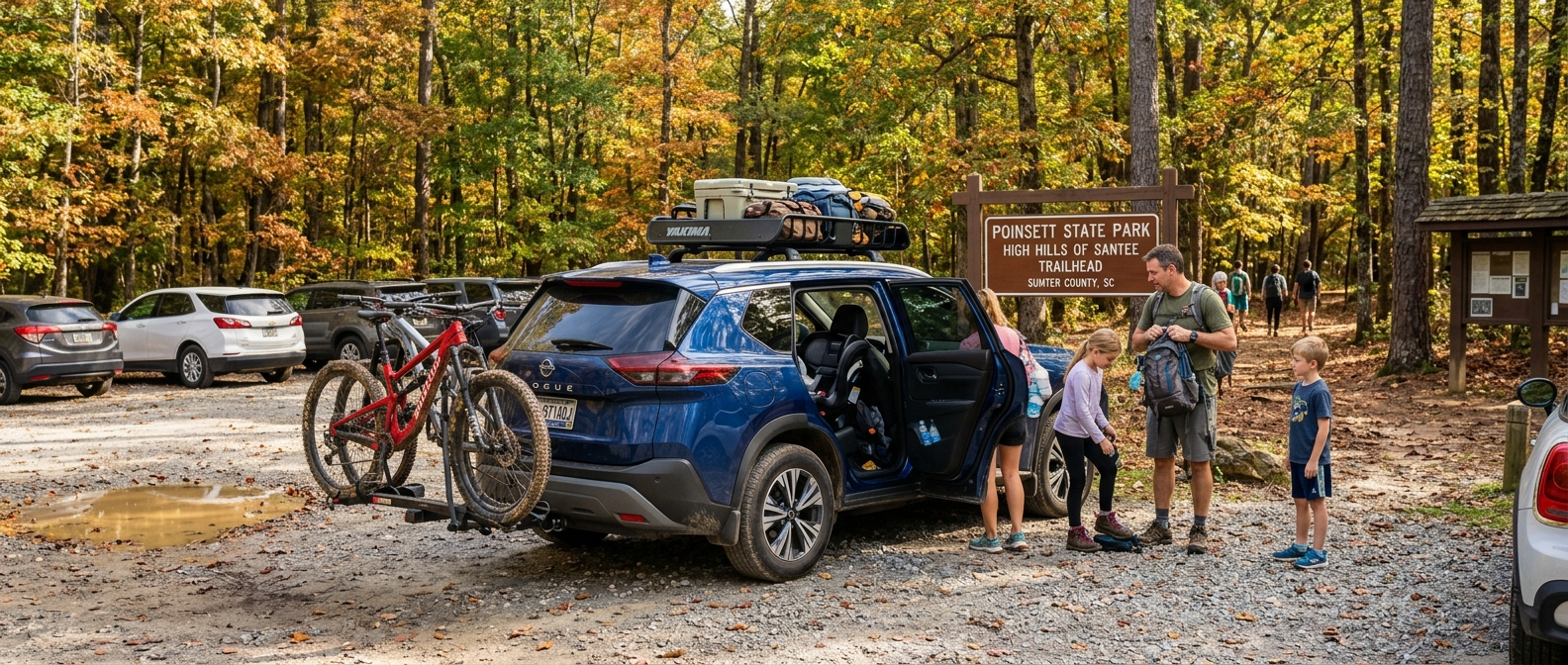
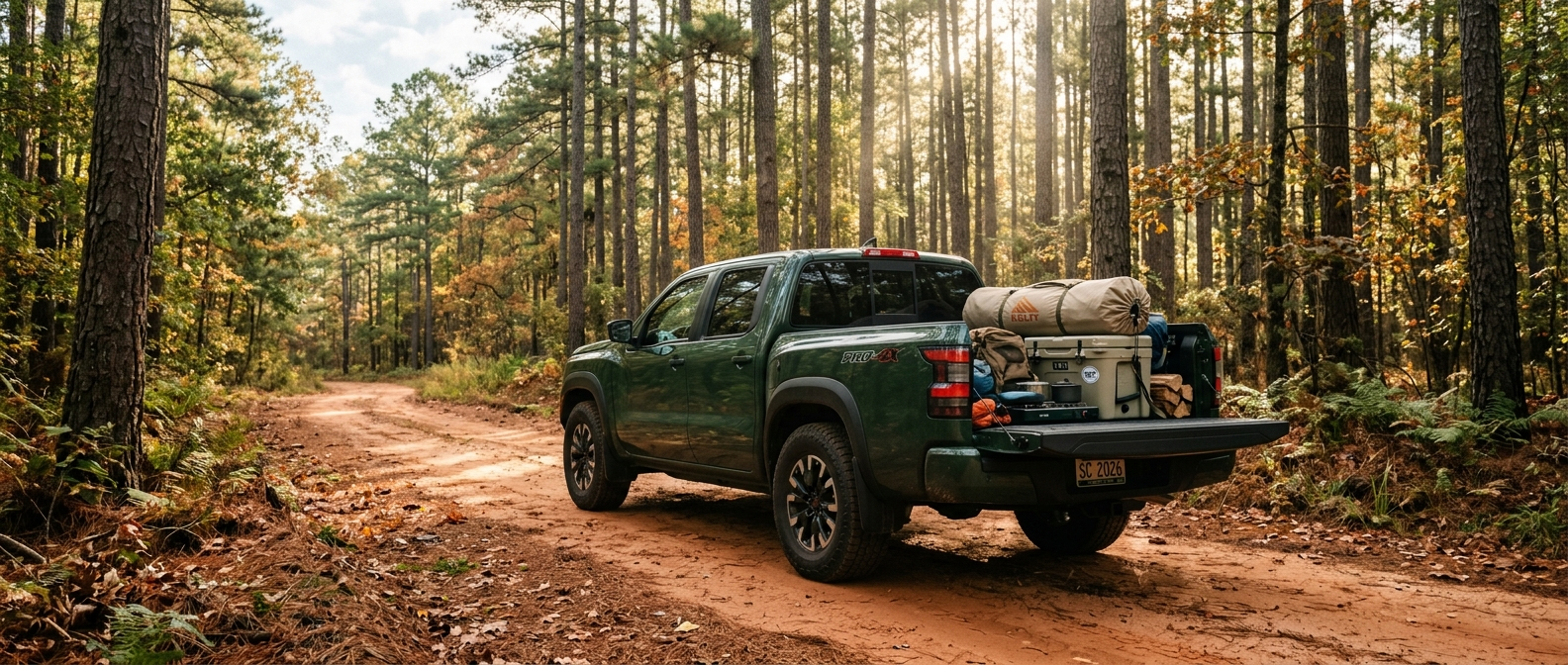
The parent who regularly runs gravel roads toward Manchester State Forest or Poinsett State Park, where paved roads end without warning
PRO-4X Crew Cab 4x4
Everything in PRO-X, plus standard 4x4 with electronic locking rear differential and steel underbody skid plates; rated to tow up to 7,150 lbs when properly equipped
Consistent heavy tower or off-road user; more capability than a typical school run requires, but earns its tier if towing is genuinely part of your weekly routine
The EPA rates the 2026 Frontier 4x2 at 19 city and 24 highway (21 combined). The 4x4 configuration comes in at 17 city and 22 highway (19 combined). For a Sumter parent doing a daily loop around town with an occasional run up US-378 toward Columbia, that gap is worth folding into your drivetrain decision. Run the math before you commit.
The Safety Case for Sumter Parents Starts at the Base Trim
Nissan makes Safety Shield 360 standard on every 2026 Frontier from the base S up to the PRO-4X, which is the detail most trim comparisons quietly skip over, and it means you don't have to climb to a higher grade for the driver assistance you want in a school lot. The suite covers Automatic Emergency Braking with Pedestrian Detection, Blind Spot Warning, Rear Cross Traffic Alert, Rear Automatic Braking, Lane Departure Warning, and High Beam Assist. All of it. Standard. No upgrade needed.
Assuming those systems live behind a higher trim would be a fair guess. They don't.
The distinction matters in a specific way for Sumter school traffic. A midsize pickup sits taller than a sedan, which helps on US-521 but creates real blind-spot exposure in a crowded school lot at afternoon dismissal. Rear Cross Traffic Alert and Blind Spot Warning cover those exact angles. Automatic Emergency Braking with Pedestrian Detection addresses the scenario every school-zone parent pictures, a child stepping into the lane. Per Nissan, this is a verified standard specification across the lineup, and it's one of the strongest arguments this truck makes to families who need utility and safety from the same vehicle.
The bed is the strongest argument for a Frontier over a three-row crossover when your family genuinely hauls, though it does ask you to give up the enclosed cargo and easy passenger space an SUV throws in, so the call comes down to how often you actually load gear. Nissan specs the standard 5-foot bed at 59.5 inches of cargo length and 40.1 cubic feet of space. The long-bed option grows to 73.3 inches and up to 49.6 cubic feet. What those numbers mean shows up on a Saturday in Sumter County.
A yard of mulch from a local home store goes in without a trailer. A generator, two bikes, and a weekend's worth of gear ride in the bed while the kids take the Crew Cab. Baseball equipment, soccer bags, and a portable canopy for a tournament all stay in back. No cargo-mode seat folding, no Tetris with a crossover's shallow cargo floor.
The available Utili-track Channel System (starting at the SV trim) adds three aluminum channels across the bed with sliding, lockable cleats. Per Nissan, each individual cleat is rated to hold up to 200 lbs. Reposition them for a different load next Saturday. Lumber won't shift on US-521 at highway speed, and hardware store runs stay organized without improvised tie-down solutions. On upper trims, available features include a spray-on bedliner, a dampened tailgate that lowers smoothly, and an available 120-volt power outlet in the bed.
Tow capacity varies by configuration, so confirm your specific build. The properly equipped 2026 Frontier is rated to tow up to 7,150 lbs. A jon boat headed toward Santee or a loaded utility trailer for a weekend project is comfortably inside that rating.
The honest trade-off: Trucks ride firmer than crossovers, and that's the fully boxed ladder frame doing its job. Fuel economy comes in lower than a comparable SUV. If your family needs three rows every day, the Nissan Pathfinder is worth a look alongside the Frontier. The Frontier Crew Cab rear seat is real and usable, but it isn't the same as a dedicated third-row setup. When your household hauls gear and passengers in equal measure week to week, both trucks deserve a back-seat test before you decide.
Every 2026 Nissan Frontier, from the base S to the PRO-4X, comes with Automatic Emergency Braking with Pedestrian Detection standard as part of Safety Shield 360, with no trim upgrade required.
The Smart Trim for Sumter: S or SV, and Why It Usually Comes Down to the Screen
For a Sumter parent whose week covers school drop-offs, work errands along Broad Street and the US-378 corridor, and occasional weekend hauls through Sumter County, the SV Crew Cab 4x2 is where this lineup settles into its practical center, though the S covers the same ground if the screen upgrade doesn't move you. A 12.3-inch wireless CarPlay screen handles hands-free navigation and audio without a cord. Add the available Utili-track bed system and weekend loads get genuine organization. The full safety suite carries straight over from the S. And the S itself isn't a stripped-out base model by any fair reading, though the SV's wireless connectivity and available bed channels are the two upgrades that pull their weight in real weekly use.
PRO-X earns its place for the parent who runs gravel roads toward Manchester State Forest or Poinsett State Park. Bilstein shocks and all-terrain tires aren't cosmetic on those surfaces. Step up to the PRO-4X and you're set for families who tow week in and week out and want the locking rear differential working behind them. Neither is wrong for Sumter, but neither adds anything to the school-run-plus-light-work equation that the SV doesn't already cover at a lower fuel and purchase cost.
Worth saying plainly, the Frontier Crew Cab rear bench is a real seat. Three adults fit. Two adults plus gear behind them ride fine. It's shorter on rear legroom than a full-size pickup, but it isn't a token seat. Spend time back there and the rear bench is more comfortable than a midsize truck leads you to expect.
If a pre-owned Frontier fits your situation better, we carry used inventory across multiple model years as well.
By the Nissan of Sumter Team | August 2026
Frequently Asked Questions
Is the 2026 Frontier Crew Cab back seat workable for kids and everyday family passengers?
Yes. The Crew Cab is a true four-door body style with a full rear bench designed for three passengers. It's a genuine seat, not the abbreviated arrangement of the King Cab. For Sumter families using this truck for school runs with two or three kids, it handles the task without complaint. Rear leg room is smaller than a full-size pickup or a dedicated three-row SUV, so if you're regularly carrying teenagers who expect full-size comfort, it's worth spending a few minutes in the back seat during your test drive before you commit.
Does Nissan's driver assistance technology stay consistent across all 2026 Frontier trims, or do you need a higher grade to get it?
It's consistent across the board. Nissan Safety Shield 360, which includes Automatic Emergency Braking with Pedestrian Detection, Blind Spot Warning, Rear Cross Traffic Alert, Rear Automatic Braking, Lane Departure Warning, and High Beam Assist, is standard on every 2026 Frontier from the base S through the PRO-4X. Higher trims add available features like the Intelligent Around View Monitor and Hill Descent Control, but the core driver-assist package that matters most in school zones and crowded parking lots is not gated by trim level. You don't need to step up a grade to get it.
Your 7-Point Altima Fuel Savings Checklist for Daily Broad Street Drives
A practical guide to maximizing fuel efficiency in the 2026 Nissan Altima during city driving. Learn how tire pressure, transmission tuning, Eco Mode usage, smooth acceleration habits, air filter maintenance, cargo management, and regular service checks work together to help drivers achieve the EPA-rated 26 mpg city figure on Broad Street's stop-and-go routes.
Broad Street isn't a highway. It's a string of signals, parking-lot cuts, and lunch-rush backups running the length of Sumter, and every one of those stops costs you fuel. The good part is that the 2026 Nissan Altima is genuinely built for this kind of driving. The EPA rates the FWD Altima at 26 mpg city and 30 mpg combined on regular-grade fuel. Building it for the job and actually hitting that number are two different things, though. This checklist gives you the seven habits and maintenance items that protect that city number on the real road.
What Goes on Your Broad Street Fuel Savings Checklist?
Seven items go on this checklist, and every one earns its place with a real, testable reason, though a couple of them matter far more in stop-and-go traffic than they ever do out on the open highway, so treat this as a priority list rather than a set of equals. Check them off before the school year ramps up and the corridor gets busier.
Your 2026 Altima Fuel Savings Checklist
[ ] Confirm tire pressure is in the 32-36 psi range
[ ] Choose FWD trim if AWD isn't serving a real need in your driving
[ ] Use Eco Mode during stop-and-go Broad Street segments
[ ] Engage gradual acceleration off every signal (let the CVT do its job)
[ ] Check the engine air filter (replace if it's been more than 15,000-20,000 miles)
[ ] Clear unnecessary cargo weight from the trunk and back seat
[ ] Schedule a service check if your mpg has dropped noticeably without explanation
That's the quick version. The rest of this post is the why behind each line.
Why These Seven Items Actually Matter
Tires come first here, because they're the easiest thing to get wrong and one of the quietest sources of wasted fuel, and unlike the other six items on the list, you can check them in about two minutes with a gauge before you ever pull out of the driveway.
On Broad Street, Keeping your Altima's tires at the correct pressure matters more than it does on the highway. At highway speeds, rolling resistance is a smaller fraction of your total fuel draw. In stop-and-go driving, it's a much bigger slice. Nissan's guidance for the Altima puts the target range at 32 to 36 psi (check the driver's door jamb label for your specific trim's spec, not the max number on the sidewall). Underinflated tires create extra friction with the pavement, and the engine burns more fuel to compensate. Checking this one is free and takes two minutes.
FWD versus AWD is the tradeoff this article won't dodge. According to the Nissan press kit, the FWD Altima earns 26 city / 36 highway / 30 combined on regular fuel. The AWD version earns 25 city / 33 highway / 28 combined, one less city mpg and three fewer highway mpg. AWD burns more fuel, and there's no way around it. Over a year of Broad Street commuting, that gap accumulates. Sumter sits in the SC Midlands, where we don't get the sustained ice or snow that makes AWD a real safety tool for most weeks of the year. If you're choosing between the two trims primarily for daily Broad Street driving, FWD is the more efficient fit for this climate. (AWD earns its keep if you're regularly running to the mountains or pulling off-road weekend shifts.)
The EPA rates the 2026 Altima FWD at 26 mpg city on regular fuel. AWD drops that to 25 mpg city. Over 12,000 city miles a year, that gap is real and recurring.
The Xtronic CVT transmission is doing a lot of work on your behalf at every traffic light, and it's easy to miss. Unlike a conventional automatic that steps through fixed gears, the CVT keeps engine RPM in its most efficient range continuously. When you accelerate smoothly off a signal on Broad Street near the Sumter Mall, the CVT holds a low RPM and lets the 2.5-liter engine work efficiently. Hammer the throttle and it raises RPM to find power, so you burn more fuel. Smooth, gradual acceleration is literally how this transmission was designed to function.
Sumter summer note. August heat means your air conditioning is running hard. A/C puts a real load on the engine, which compresses the gains from good driving habits. You won't wipe out that load, but a well-maintained car (clean air filter, correct tire pressure, fresh oil) holds up better under it than a neglected one.
Eco Mode is a real function. It softens the throttle mapping, which makes it easier to hit smooth, CVT-friendly acceleration even if your right foot isn't perfectly calibrated. We'd leave it on for most Broad Street runs. Switch it off when you need confident merging onto US-378 outbound toward Shaw AFB or pulling into a fast-moving left turn.
The air filter is the easiest item on this list to let slide, and a clogged one restricts airflow to the combustion chamber and forces the engine to work harder for the same output. If your Altima has run 15,000 to 20,000 miles on the same filter in SC Midlands humidity and pollen, have it looked at, since the inspection is quick and replacement is an inexpensive fix if needed.
Checklist Item
Why It Matters on Broad Street
Tire pressure (32-36 psi)
Low pressure increases rolling resistance in stop-and-go driving
FWD trim choice
EPA shows FWD earns 1 mpg more city and 3 mpg more highway than AWD
Eco Mode on
Softens throttle, makes smooth CVT-friendly acceleration easier
Smooth acceleration
CVT keeps RPMs low only when you give it steady, gradual input
Air filter check
Restricted airflow forces the engine to burn more fuel for the same power
Reduce cargo weight
Extra pounds mean extra load on every acceleration from a standing stop
Service flag for mpg drop
Unexpected drops often signal a fixable maintenance issue
Because every stop on Broad Street asks the engine to accelerate a full load from rest, cargo weight comes down to straightforward physics. If your trunk is carrying gear that doesn't need to be there, it's costing you on every traffic-light restart. Clear it out.
The last item matters most if you've noticed your mpg quietly declining. The Altima's onboard trip computer is a useful reference. If your average has dropped without any obvious cause (longer city-heavy routes, more A/C use), that often signals something fixable, like an air filter, tire pressure drift, or a service item that's past due. Browse our available Altima inventory if you're at the stage of weighing whether it's time to upgrade instead of maintain.
All seven items work together, and no single one carries the whole load, though tire pressure and smooth acceleration probably do the most for your daily number on a corridor this stop-heavy, so the recap below keeps them all in one place. The Nissan press kit rates the 2026 Altima FWD at 30 mpg combined and 26 mpg city. That city number is what matters most for Broad Street driving, and it's achievable when the car is maintained and driven the way the CVT was designed to be driven. The Nissan Sentra earns slightly higher city ratings if pure commuter efficiency is your only priority, but the Altima gives you the roomier cabin and more standard features without sacrificing much at the pump.
The print-and-go version of the checklist looks like this.
Tire pressure: 32-36 psi, checked monthly
FWD vs AWD: honest assessment of whether AWD earns its 2-3 mpg cost in your real routes
Eco Mode: on for Broad Street, off for fast merges
Smooth acceleration: let the CVT find its efficient range off every signal
Air filter: inspected every 15,000-20,000 miles in our SC pollen and humidity conditions
Cargo: cleared of anything that doesn't need to be there
Mpg drop: flagged early and brought in for a service look before a small issue becomes a big one
We're at 2600 Broad St, right in the middle of the same corridor you're already driving. If you want to talk through trim choices, check what's in stock, or bring your Altima in for a service visit, our team is here.
Frequently Asked Questions
Does the 2026 Nissan Altima really get 30 mpg in Sumter stop-and-go traffic?
The EPA rates the FWD 2026 Altima at 30 mpg combined, but that figure blends city and highway driving. The city-only rating is 26 mpg. On a stop-heavy corridor like Broad Street, with signals and parking-lot cuts, expect to land closer to that 26 city figure most days. You can protect that number with correct tire pressure, smooth acceleration, and Eco Mode on, but you won't consistently beat the city rating in dense urban stop-and-go. The combined 30 reflects real-world mixed driving, and Sumter commuters who also log some highway miles on US-378 to Columbia will see averages closer to that mark over time.
Does AWD hurt the Altima's fuel economy, and is it worth it for Sumter driving?
Yes, AWD does cost fuel economy. According to Nissan's official press kit, the AWD Altima earns 25 city / 33 highway / 28 combined on regular fuel, compared to 26 city / 36 highway / 30 combined for the FWD model. The gap is a real one mpg city and three mpg highway. For Sumter and the SC Midlands, where sustained ice or snow is rare, a daily Broad Street commuter won't often find AWD earning back that efficiency gap through traction. If your driving includes regular trips to the upstate, the mountains, or frequently wet rural roads, AWD is a legitimate consideration. For a strictly local Sumter daily driver, FWD is the more efficient choice.
How to Choose the Right Nissan for Your Daily Bishopville-to-Sumter Commute
A practical guide to matching a Nissan to the Bishopville-to-Sumter commute. Learn how the Sentra's highway fuel economy, the Altima's cooling capacity and interior space, and the Kicks' cargo room each address different commuter priorities on this 22-mile rural route, and how to weigh those factors before you visit the lot.
The Bishopville-to-Sumter run is 22 miles on US-15, mostly flat two-lane road through the SC Midlands. No major traffic chokepoints. No mountain grades. What it does have is a South Carolina August (and June, and July) that turns your commute into a rolling heat-management exercise. Pick the wrong Nissan and you're fighting an underpowered AC, a tank that needs filling twice a week, or a cargo area that can't handle a second life hauling gear on weekends.
Pick the right one and this commute costs you almost nothing in mental energy. That's the whole reason it pays to match the car to the road before you buy.
For most Bishopville commuters, the 2026 Nissan Sentra is the strongest fit on fuel economy alone, with the Altima stepping up when interior space and highway composure matter more, and the Kicks earning its place for anyone who needs weekend cargo room alongside the daily grind.
On a 22-mile US-15 run, highway mpg matters far more than city mpg. All three Nissan commuter models earn their best numbers at exactly the speeds you'll spend most of your morning on.
What You Need Before You Start
Before you choose a trim or a model, nail down these four numbers. They determine everything.
Factor
Why It Matters on US-15
What to Know
Daily round-trip miles
44 miles/day x 5 days = 220 miles/week
Drives your real weekly fuel cost
Cargo needs
Do you carry tools, a stroller, weekend gear?
Sedan trunk vs. SUV cargo floor
Passenger count
Regular carpool or solo?
Rear legroom becomes a real spec
AC demand
Sumter summers routinely exceed 95 degrees F
Engine size affects AC recovery time under load
Two of those four factors (cargo and AC) are ones that most generic commuter guides skip for a flat rural run like this one. We watch both matter on the lot every summer, especially for commuters who also lean on their car on the weekends.
The Nissan Kicks is worth a look if cargo is a yes. It offers up to 30.0 cubic feet of cargo space with the rear seat upright, a real truck-bed alternative for a compact vehicle.
Matching Your Nissan to the Bishopville Commute: Five Steps
Step 1. Run the Highway Number, Not the City Number
US-15 between Bishopville and Sumter is two-lane rural highway for most of its length, so your commute is almost entirely highway driving, and that changes the math on which model actually saves you money. Your city number barely comes into play. Per EPA estimates, each 2026 model earns these highway figures.
2026 Nissan Model
Highway MPG (FWD)
Combined MPG
Tank Size (FWD)
Sentra S/SV
38 mpg hwy
33 mpg combined
12.4 gal
Altima FWD
36 mpg hwy
30 mpg combined
16.2 gal
Kicks FWD
35 mpg hwy
31 mpg combined
11.8 gal
The Sentra's 38-mpg highway rating is the number that matters here. At 220 miles of weekly driving, that gap between the Sentra and the Kicks adds up over a full year of Midlands summers.
Step 2. Factor In the Heat
Heat is the variable that flips a spec sheet on its head, and we'd rather flag the tradeoff now than let you find it in July with the AC cranked. All three engines are four-cylinder units. The Sentra makes 149 horsepower and the Kicks makes 141 horsepower. Running AC hard in 97-degree heat loads a small engine. The Kicks feels strained when the AC is cranked and you need to pass on the two-lane stretch of US-15 near Mayesville. The Altima's 2.5-liter engine produces 188 horsepower on FWD trims and handles heat-plus-load more confidently. None of that knocks the Sentra or the Kicks. For a solo commuter on a flat road, both are perfectly adequate. For a family driver running AC at full blast with a backseat full of kids, the Altima's extra headroom (horsepower headroom, that is) is worth it.
Step 3. Decide on Interior Space
Interior space is where the three models split hardest, so match it to who and what you actually carry. The 2026 Sentra seats five and offers 14.3 cubic feet of trunk space (compact sedan dimensions). The Altima's rear seat offers 35.2 inches of legroom, which is fine for shorter commutes but tight for taller passengers on a 34-minute daily ride. If you're carpooling regularly, that rear seat experience matters. The Kicks trades trunk space for an SUV-style cargo floor, giving you 30.0 cubic feet behind the rear seat and 60.0 cubic feet with the seat folded. If your car doubles as a weekend hauler for Lee State Park trips or a run to Manchester State Forest, the Kicks earns its keep in a way a sedan simply can't.
Step 4. Consider How Often You Want to Stop for Gas
Fuel range is the step that's easy to skip, and it quietly shapes how the commute feels week to week. With the Sentra's 12.4-gallon tank and 38 mpg highway, a commuter driving 220 miles a week will stretch a tank across roughly two full work weeks before needing a fill-up. The Altima's larger 16.2-gallon FWD tank offers even more range between stops, though its slightly lower highway number narrows the gap. The Kicks' 11.8-gallon tank is the smallest of the three. Combine that with highway-dominant driving and you'll be at the pump every week and a half or so. Not a dealbreaker, but worth knowing.
Step 5. Match the Tech to Your Commute
Tech is the last piece, and on a quiet rural run it does more for your morning than the horsepower chart suggests. The 2026 Sentra is a genuinely new vehicle this model year with a standard 12.3-inch touchscreen, recalibrated CVT, and a stiffer chassis that cuts road noise. Thirty minutes of rural highway is quiet enough that you'll notice road noise. That stiffer chassis and acoustic work make the Sentra a noticeably more relaxed commuter than its predecessor, and it comes standard on every trim. The Altima brings standard Intelligent Cruise Control, which on a long flat stretch like US-15 is the kind of low-drama feature that makes a daily commute feel effortless. Explore current financing options if you want to see what each model costs to own.
Step that's easy to get wrong: Comparing city mpg instead of highway mpg. On a stop-light-heavy urban commute, city numbers matter. On US-15 through Lee County, they don't. You'll spend most of your commute at 55 mph, which is exactly where highway EPA numbers are earned. Run the highway column.
Team observation: We notice that commuters from Bishopville who also serve at Shaw AFB or work at Prisma Health in Sumter tend to prioritize a quiet ride and reliability over raw cargo room (two areas where the Sentra's 2026 redesign clearly upgraded versus the outgoing generation). The recalibrated CVT and reduced road noise are verifiable spec changes, not marketing language.
Print this or screenshot it. Three models, three profiles.
If You Are...
Best Pick
Why
Solo commuter, fuel economy priority
Sentra S or SV
EPA 38 mpg highway, lowest running cost on US-15
Carpool driver or heat-load concern
Altima FWD
188 hp handles AC demand, more rear legroom
Weekend hauler + daily commuter
Kicks FWD
30 cu ft cargo with seats up, SUV floor for gear
A few things don't change regardless of which model you choose. All three are 2026 Nissans with standard safety tech (automatic emergency braking, lane departure warning), all three run on regular unleaded fuel, and all three sit on our lot at Nissan of Sumter's new inventory right now.
The straight word from our team is that the Sentra wins the Bishopville-to-Sumter math on paper. The Sentra isn't the biggest cabin and isn't the most powerful engine. But 38 mpg on the highway, a new 12.3-inch touchscreen, and a quieter ride make it a daily driver that stops feeling like a compromise after the first week. If your life outside the commute needs more (cargo, power, rear seat room), one of the other two fits that.
Frequently Asked Questions
Which Nissan gets the best highway mpg for the Bishopville-to-Sumter drive?
The 2026 Nissan Sentra S and SV trims earn the highest highway fuel economy of the three commuter models, rated by the EPA at 38 mpg on the highway. Because the Bishopville-to-Sumter commute on US-15 is predominantly highway driving, that highway number is the most meaningful figure for this route. The Altima FWD follows at 36 mpg highway and the Kicks FWD at 35 mpg highway.
Does the Nissan Kicks have enough cargo space for weekend use alongside daily commuting?
Yes. The 2026 Nissan Kicks offers 30.0 cubic feet of cargo space with the rear seat upright and up to 60.0 cubic feet with the seat folded. For commuters who want to use the same vehicle for weekend gear hauling, a trip to Lee State Park, or routine errands, the Kicks provides meaningfully more usable cargo room than either the Sentra or the Altima sedan trunk.
Fitting the Whole Team (and All Their Gear) at Patriot Park Sportsplex
A practical guide to fitting tournament gear and passengers in one vehicle. Learn how the 2026 Pathfinder's three-row layout, cargo configurations, and EZ FLEX Seating System help Sumter families balance players and equipment for Patriot Park Sportsplex events, with 16.6 cubic feet of cargo space with all rows occupied and 80.5 cubic feet when both rear rows fold flat.
Tournament morning at Patriot Park Sportsplex comes down to one thing. You've got four kids, six baseball bags, a rolling cooler, and a camp chair, and somehow all of it has to fit before the 8 a.m. first pitch. Sumter families who run that shuffle week after week face a genuine question no generic cargo spec answers (which SUV really solves the three-row-versus-gear problem in real life?). The 2026 Pathfinder is our answer, and we'll walk you through why using its real configurations.
The 2026 Nissan Pathfinder offers 16.6 cubic feet of cargo space with all three rows occupied, 45.0 cubic feet with the third row folded, and a full 80.5 cubic feet with both rear rows flat (giving Sumter families a meaningful choice between passenger seats and gear space every time they load up for Patriot Park).
Patriot Park Sportsplex hosts year-round baseball, softball, and soccer, so the gear changes by season while the packing problem holds steady. You're working with bulky bags, a mix of ages in the back seat, and August heat that turns a hands-free liftgate into something genuinely useful rather than a nice-to-have. The Pathfinder's cargo system lines up with those real conditions at the park, and the table below breaks it down.
Local Condition or Use
Pathfinder Feature That Handles It
Why It Matters Here
Multiple kids in all three rows
8-passenger three-row layout (7 with captain's chairs)
Keeps everyone seated without folding a row for gear
Tournament gear: bags, bats, cleats
16.6 cu ft behind third row; 45.0 cu ft third row down
Choose based on how many riders you have that day
Hands full of bags at the car
Available motion-activated (kick) liftgate
Open the gate without setting gear on the hot asphalt
Wet cleats, muddy gear after a game
Underfloor storage compartment (SL/Platinum) and easy-clean cargo floor
Keeps the mess contained and separated from bags
Child seat stays installed
EZ FLEX Seating System: second row slides and tilts with child seat in place
Third-row access without uninstalling the car seat
Hauling a gear trailer for big tournaments
Up to 6,000 lbs towing capacity when properly equipped
Gear sits in a climate-controlled cabin, not a hot trunk
The Cargo Floor Dimension That Actually Decides It
One figure matters more than the cubic-foot headline, and Nissan lists it plainly. The 2026 Pathfinder's maximum cargo floor measures 79.8 inches long by 48.8 inches wide, which comes out to nearly six and a half feet of usable flat length once both rear rows fold down. A standard aluminum baseball bat bag runs about 36 inches; four of them, laid side by side across that 48.8-inch width, fit without stacking. You're not playing Tetris at 7:45 in the morning (you're just loading and driving).
The third-row-only fold is where most Sumter tournament routines settle. At 45.0 cubic feet with the third row flat and the second row still occupied, you keep your passengers and gain the kind of loading depth that swallows a rolling equipment bag without a fight. That setup suits a family running one child in a car seat in the second row who still needs a full soccer kit behind them.
The EZ FLEX Seating System earns its name at Patriot Park too. Nissan designed the second row to slide forward and tilt even with a child seat installed, which clears a path to the third row from either side of the vehicle. No tools, no lifting the seat base off the floor. You pull the release, the row glides, and your youngest climbs in. On a summer morning when everyone's already running five minutes late, that counts.
Sumter summer note. August in the Midlands brings heat indices that regularly push past 100 degrees. The motion-activated liftgate on SV and above trims lets you open the cargo door with a foot swipe when your hands are full of bags. No touching a hot metal handle, no setting gear on the scorched parking lot surface while you fumble for the fob.
A few packing patterns that work well for the Pathfinder at Patriot Park:
Flat equipment bags (bat bags, soccer bags) load best laid horizontal across the cargo floor rather than stood upright; the 79.8-inch floor length accommodates four standard bags flat
The underfloor compartment on SL and Platinum trims holds a first-aid kit, sunscreen, and small valuables out of sight and separate from sweaty gear
Cargo tie-down hooks in the rear area keep a cooler anchored on the drive over so it doesn't shift into the bags
If you're traveling to a tournament and towing a gear trailer, the properly-equipped Pathfinder supports up to 6,000 lbs (enough for a utility trailer with equipment for a full team)
Where the Pathfinder Has a Real Tradeoff (and Where It Still Wins)
We'll be straight about the limit, because it's a real one. If you need all three rows occupied and maximum cargo space at the same time, no three-row SUV fully solves that math, and the Pathfinder gives you 16.6 cubic feet with all eight seats up (enough for a few bags and a cooler, not a full tournament load for a team of six kids). The ceiling is real. Plan around it, and the rest of the vehicle earns its keep.
Where the Pathfinder wins is flexibility. The EZ FLEX row folds fast enough that the configuration shifts at the park, not at home the night before. Drive to Patriot Park with the full second and third rows up, unload the players, then flip the third row for the gear run home. The seat fold happens from inside the cargo area, not from climbing over a seat, and that kind of practical changes your Saturday.
The Nissan Frontier handles a completely different hauling situation if your gear is oversized or you're pulling a larger trailer regularly (worth knowing if your family's needs go beyond a weekend tournament run).
A Pathfinder Configured for the Patriot Park Routine
The configuration that fits Sumter's tournament-family routine pairs three things. Start with the second-row EZ FLEX bench so you keep eight seats as an option, add the SV trim or above for the power liftgate, and pick the SL or Platinum underfloor compartment for keeping wet or dirty gear separated from everything else. The EPA rates the 2026 Pathfinder FWD at 21 city and 27 highway miles per gallon, so the run from Broad Street out to General Drive and back doesn't add up to much at the pump across a full season of Saturday tournaments.
If your kids play at Patriot Park, you already know the logistics of tournament day are half the sport. The Pathfinder's cargo system is built for exactly that. Real configurations, real access, and a cargo floor long enough to handle the bags without a packing strategy session the night before. Come see it in person. Load your actual gear, because loaded and driven is the only spec that really counts.
Schedule a service appointment to keep your Pathfinder ready for every tournament weekend (and come by for a look at what fits).
Nissan Rogue vs. Nissan Kicks: Which One Actually Fits a Small Family in Sumter?
A practical guide to choosing between two popular Nissan SUVs for families in the Sumter area. Learn how the 2026 Rogue and 2026 Kicks compare in rear legroom, cargo space, fuel economy, and highway performance, and discover which model better suits families with young children versus those taking regular trips to Columbia and beyond.
If your kids are still small and one parent commutes most days, the 2026 Nissan Kicks can genuinely work as your family hauler. But load up the whole crew regularly, especially for that 45-minute push down US-378 to Columbia, and the Rogue's extra space quits looking like a luxury and becomes something closer to a necessity.
The short version
Both the 2026 Rogue and 2026 Kicks seat five and include Nissan Safety Shield 360 standard on every trim.
The Rogue offers 38.5 inches of rear legroom and 36.5 cubic feet of cargo behind the rear seats; the Kicks gives you 34.5 inches and 30 cubic feet (FWD models).
The EPA rates the Rogue FWD at 29 city / 36 highway; the Kicks FWD comes in at 28 city / 35 highway. Practically identical on your daily commute.
The deciding factor is not fuel economy. It's how fast your kids' legs are growing.
Families who load the whole crew regularly will feel the Rogue's extra room on every single trip.
What's the Real Difference Between These Two Nissans?
On paper these two Nissans read like cousins, and much of the spec sheet backs that up, but slide into the back seat and they feel worlds apart, which is where a young family's decision gets made. Both are SUVs, both follow the same family-friendly playbook, and both roll off our lot with Nissan Safety Shield 360 standard. The gap that matters shows up in three numbers.
Spec
2026 Nissan Rogue
2026 Nissan Kicks
Rear Legroom
38.5 in
34.5 in
Cargo (seats up)
36.5 cu ft
30.0 cu ft (FWD)
Cargo (seats down)
74.1 cu ft
60.0 cu ft (FWD)
EPA MPG (FWD)
29 city / 36 hwy
28 city / 35 hwy
Engine
1.5L VC-Turbo, 201 hp
2.0L 4-cyl, 141 hp
Length
183 in
171.9 in
Towing
Up to 1,500 lbs
Not rated for towing
Safety Shield 360
Standard
Standard
Four inches of rear legroom sounds trivial on a spec line. Sit a nine-year-old in both cars on the same afternoon, though, and it stops sounding trivial at all. Call that the honest version of this comparison.
The single deciding factor: how often the whole family rides together, not which car gets better gas mileage (they're nearly tied).
Does the Kicks Have Enough Room for a Growing Family?
For a toddler in a rear-facing car seat, the Kicks absolutely does the job, and it holds up better than its compact footprint suggests, right up until the day your family's gear starts outgrowing the cargo hold. The Kicks seats five, and Nissan fits it with Zero Gravity front and outboard rear seats, so nobody's squirming on the way to Swan Lake Iris Gardens or a weekend run out to Poinsett State Park. A 12.3-inch touchscreen is standard on every 2026 Kicks trim, which means the full Safety Shield 360 suite, wireless Apple CarPlay, and adaptive cruise control come along without an upgrade conversation.
We'll level with you on the downside. That 30 cubic feet behind the rear seat gets tight once you've got a stroller, a diaper bag, and two kids' backpacks in play. You can fold the rear bench flat and open 60 cubic feet, but then someone's riding on top of the luggage, which rather defeats the purpose.
The 2026 Nissan Rogue gives you 36.5 cubic feet behind the rear seat with everyone seated. That works out to a meaningful 6.5-cubic-foot difference when you're loading for a beach weekend or a scout camping trip. The Rogue's Divide-N-Hide cargo system also lets you organize that space six different ways, which sounds like a feature-sheet detail right up until you're trying to keep a bag of soccer cleats from rolling into a car seat.
US-378 turns this into a real-world question rather than a brochure scenario, and on fuel economy the two land almost on top of each other, though the way each one behaves at highway speed is where a genuine gap opens up. If one parent runs that 45-minute commute daily while the other handles school pickup in Sumter, the fuel-economy story stays close. The EPA rates the Rogue FWD at 29 city / 36 highway and the Kicks FWD at 28 city / 35 highway. One mile per gallon separates them in each direction. Over a week of mixed Sumter driving plus one Columbia run, you won't feel that in your wallet.
What you do feel at highway speed is the Rogue's extra weight and longer wheelbase working in your favor. It's more planted. On a busy stretch of I-20 merging toward Columbia, 201 horsepower gives you noticeably more confidence during a pass than the Kicks' 141 horsepower does. The Kicks is fine for that trip. The Rogue just makes it easy.
Buyer Situation
Better Pick
Daily Sumter commuter, kids still in car seats
Kicks
Whole family loads up most weekends
Rogue
Tight on budget, youngest is under 3
Kicks
Kids 6+ with long legs
Rogue
Frequent Columbia / Charleston day trips
Rogue
Mostly in-town driving, one or two passengers
Kicks
A note on ground clearance: The 2026 Kicks actually leads its segment at 8.4 inches of clearance, handy if you take the gravel access road into Manchester State Forest or the packed-dirt parking at Poinsett State Park. Nissan doesn't publish the Rogue's clearance in those same class-leading terms. For the occasional off-pavement run, the little Kicks surprises you.
30 cu ft cargo (seats up) is tight for gear-heavy families
Slightly lower MPG (one MPG difference vs. Kicks)
Not rated for any towing capacity
So Which One Should You Pick?
Pick the Rogue if your family actually fills the car most days, because four inches of rear legroom and 6.5 extra cubic feet read like small wins on paper but land as the difference between a comfortable Saturday trip and everyone rearranging bags at a rest stop. Families with kids old enough to notice their knees, families who take gear-heavy weekend trips, and anyone running Columbia or Charleston day trips on a regular basis will use every inch the Rogue provides.
Pick the Kicks if your family is still in the toddler-and-car-seat phase and one vehicle genuinely covers most of the miles while the other sits in the driveway. Don't read that as a compromise buy. Nissan sized this one thoughtfully, and the 8.4 inches of ground clearance means it handles more than a grocery run when the occasion calls for it, gravel roads included.
When a family weighs these two at our counter, our advice runs the same way. Sit in the back seat of both. Not the driver's seat. The back seat, where the kids live. Fifteen minutes back there tells you more than any spec sheet.
Talk to our finance team about building a payment that fits your situation, or give us a call at (803) 469-3424.
Frequently Asked Questions
Is the 2026 Nissan Kicks actually big enough for a family of four?
It depends on how old your kids are. The Kicks seats five and comes with Zero Gravity seats in the front and outboard rear positions, so for families with toddlers or young children still in car seats, the cabin handles the load. Cargo is the pinch point. With 30 cubic feet behind the rear seat on FWD models, a stroller plus luggage plus daily bags fills that space quickly. Once your kids hit six or older with long legs, the Rogue's 38.5 inches of rear legroom (against the Kicks' 34.5) turns into a weekly quality-of-life difference.
Do both the Rogue and Kicks come with standard safety features?
Yes. Nissan Safety Shield 360 comes standard on every trim of both the 2026 Rogue and the 2026 Kicks. The bundle includes automatic emergency braking with pedestrian detection, blind-spot warning, rear cross-traffic alert, and lane-departure warning. The Rogue adds available ProPILOT Assist on upper trims for semi-autonomous highway driving, and the Kicks adds available ProPILOT Assist on its top SR grade. Neither vehicle makes you pay extra for the foundational safety suite.
Your Move from Sumter to Columbia: Three Nissans That Actually Handle It
A guide to choosing the right Nissan for a student move from Sumter to Columbia. Learn how the 2026 Sentra, Kicks, and Rogue each handle the 44-mile drive and campus life after unpacking, with cargo space, fuel efficiency, and parking considerations for solo students, families, and Shaw AFB relocations.
Here's the plan, and it really is straightforward. Pick the right vehicle for your specific load and your specific 44-mile drive out US-378 to Columbia, then make sure that same vehicle still works as your everyday campus car once you're unpacked. The August heat is real, the cargo question is real, and the answer depends on what you're hauling and how many parents are riding along.
The 2026 Nissan Kicks is the one we'd steer a student toward first. It's compact enough to navigate Five Points parking, the cargo floor swallows 30 cubic feet of gear with the rear seats up, and the EPA rates the front-wheel-drive version at 31 miles per gallon combined. Keep reading, though. The right answer shifts with your situation.
What's the Plan at a Glance?
Stop / Stage
What to Do
Best Time
Parking Notes
Sumter (load-up)
Pack the night before; leave by 8 a.m.
Early morning (cooler, less traffic)
Your driveway or Nissan of Sumter lot if staging
US-378 West to Columbia
44-mile run, mostly open highway
7-9 a.m. (beat the move-in rush)
N/A
USC Columbia or off-campus drop
Unload; make two trips if needed
Morning check-in window
Campus move-in zones (timed); nearby decks for extras
Shaw AFB families moving off-base
Same corridor, same timing
Coordinate with PCS orders
Varies by housing area
Columbia errands (IKEA, Target, etc.)
Post-move-in supply run
Midday, after unloading
Plenty of deck parking near Assembly St. corridor
The Sentra: Best for the Solo Student on a Budget
If you're a single student moving a sedan's worth of belongings, the 2026 Nissan Sentra makes a genuinely strong case, and though the trunk keeps you honest about how much you bring, the EPA rates its S and SV trims at 29 city and 38 highway miles per gallon, so on a 44-mile run of mostly open Midlands highway that efficiency adds up on a student budget. The 2.0-liter engine produces 149 horsepower and 146 pound-feet of torque, enough to handle a loaded trunk without feeling strained.
Now the tradeoff, and it's a genuine one. The Sentra's trunk measures 14.3 cubic feet, which covers a full laundry basket, a couple of duffel bags, and a crate or two. It won't swallow a futon, a mini-fridge, and a TV in one trip. If that's your list, plan on two runs or borrow your parents' SUV for the big stuff.
Where the Sentra earns its keep is the daily-driver life after the move. Street parking near the University of South Carolina can get tight, and a compact sedan slots in where a Rogue or Pathfinder hesitates. The Sentra also comes standard with Nissan Safety Shield 360 on every trim, which includes blind-spot warning and rear cross-traffic alert. That matters at 7 a.m.
Insider note from our team: Sumter to Columbia runs mostly US-378 and US-76, flat and open. Sedans hold their highway MPG figures well on that corridor. Pair the Sentra's 12.4-gallon tank with that 38-highway-mpg rating and you're looking at a range comfortably beyond 400 miles on a full tank, so fuel stops mid-move aren't part of your day.
The Kicks: One Vehicle for the Move and Everything After
The 2026 Nissan Kicks is the most versatile choice for this specific move, and that's not a soft compliment, though a taller passenger riding in back will notice the roofline on a longer trip, which is the one limit worth flagging up front before we get to the cargo math. With the rear seats up, Nissan lists 30 cubic feet of cargo space on FWD models. Fold them down. Now you're at 60 cubic feet. That's not SUV territory, but it's enough for a futon mattress, boxes, and soft goods in a single trip when you pack it right.
The 2026 Kicks also carries a 12.3-inch touchscreen with wireless Apple CarPlay and Android Auto standard across all trims. No adapter cable, no hunting for a USB port in a moving-day scramble. Small thing, until the day it isn't.
The EPA rates the FWD version at 28 city and 35 highway miles per gallon. On your 44-mile Sumter-to-Columbia run, you'll barely notice the fuel gauge move. The 141-horsepower 2.0-liter is adequate rather than exciting (nobody buys a Kicks for the drag strip). You won't feel sporty. But you'll feel confident.
One limitation stands out, and it's the roofline. A taller passenger in the back seat feels it, so if Mom and Dad are riding along to help, keep the front seats for anyone over six feet. Keep that in mind before you volunteer to drive the whole crew.
What Families Moving Out of Shaw AFB Should Consider
Families moving a student out of Shaw AFB usually need one vehicle to do two jobs at once, hauling furniture and carrying several people down the same US-378 corridor, which points you toward more space than a solo car-load run ever asks for. A student or a young service member is heading to USC Columbia or setting up a first apartment, and the family wants to pitch in on the hauling. You won't cover that with one packed trunk and a quick drive off.
Next step: If you're coordinating a PCS-adjacent move where one vehicle has to carry furniture and multiple people, talk to our team before move-in weekend. We'll walk you through cargo configurations on the Rogue or Kicks and let you see the actual cargo floor with the seats folded.
For that scenario, the 2026 Nissan Rogue is worth a hard look. Nissan lists 36.3 cubic feet behind the rear seats and 74.1 cubic feet with them folded, and the available Divide-N-Hide cargo system gives you six ways to configure that space. The 1.5-liter VC-Turbo engine produces 201 horsepower, and the EPA rates the front-wheel-drive Rogue at 29 city and 36 highway miles per gallon. You're getting real SUV capability without the penalty at the pump.
The Rogue's rear seat offers 38.5 inches of legroom, so three adults in back on a 44-mile drive is a reasonable ask. Nobody's cramped.
Matching the Vehicle to Your Columbia Life After the Move
The move itself is one day, but the vehicle you pick lives in Columbia for the next year or more, so it's worth weighing daily parking and campus errands against cargo space before you let the moving load make the call for you.
The Sentra is the most maneuverable daily driver in a dense campus neighborhood. Parallel parking on Devine Street, or threading the Vista on a football Saturday? A sedan wins that game. The Kicks sits just a bit higher, which some students prefer for visibility, and it handles Five Points street parking without drama. Our full lineup at Nissan of Sumter has all three in stock, so you'll be able to compare cargo floors in person before move-in weekend.
The Rogue makes the most sense when Columbia life involves regular returns to Sumter, beach weekends on the coast, or hauling gear for activities. Its 36-mpg highway rating keeps those trips affordable. For a family in the Shaw AFB community sizing up a vehicle for a student heading to Columbia, the Rogue tends to fit the bill, since it'll handle every leg of the move and keep working as a practical everyday vehicle on either end of US-378.
One thing we tell folks who come in during move-in season is simple. August in the Midlands is brutal. All three of these vehicles come with dual-zone or solid climate control and Nissan Safety Shield 360 standard, and on a hot moving day the remote start available on SV and higher trims lets you cool the car down before you load the last box. Worth more than it sounds when it's 95 degrees and humid before 10 a.m.
Does the Armada Actually Fit Your Big Family This School Year?
The 2026 Nissan Armada's bench vs. captain's chairs choice shapes your whole school-year carpool. Here's how the space actually works for Sumter, SC families.
School season in Sumter hits fast. One week you're wrapping up a lake weekend at Santee, and the next you're juggling morning drop-offs, afternoon pickups, travel-team carpools, and the occasional Shaw AFB family piling in for a weekend run to Columbia. If you're shopping a full-size SUV right now, the 2026 Nissan Armada's "seats up to eight" headline is probably what stopped your scroll. But here's the question that actually matters here. Eight seats on paper is one thing, and eight seats that work for your specific school-year routine is another. So what's the difference?
The answer comes down to one choice, bench seat or captain's chairs. That decision changes your seating count, your cargo math, and how easy it is to buckle a toddler in the middle of a Tuesday afternoon, and we'll walk you through exactly how it works.
The 2026 Armada's bench second row seats eight passengers and leaves 20.4 cubic feet of cargo space behind the third row, enough for a week's worth of backpacks and sports gear even with every seat occupied.
The eight-seat layout works because the Armada is a body-on-frame, full-size SUV built on three genuine rows, and while Nissan lists the interior at 167.6 cubic feet of passenger volume, it's the per-row numbers that tell you how the space really feels. That per-row space is where your family lives day to day, and Nissan's published specifications lay them out across all three rows.
Row
Legroom
Headroom
Shoulder Room
First (driver/passenger)
43.8 in
40.8 in
64.2 in
Second
39.2 in
40.0 in
63.7 in
Third
32.9 in
36.2 in
63.1 in
A couple of things stand out here. Row 2 is nearly as tall as the front seats, so adults don't spend a Sumter-to-Columbia run hunched. Row 3 asks for a little context. It offers comfortable room for middle-schoolers and manageable space for adults on shorter trips, though a six-foot adult back there for a three-hour stretch will feel it. So it's the kids' row.
Shoulder room is where the body-on-frame design pays off. All three rows measure between 63 and 64 inches wide, enough for three passengers per row without anyone eating an elbow, so nobody's crammed against the door.
Bench or Captain's Chairs: Which One Fits Your School Routine?
Between the bench and the captain's chairs, the right pick shapes your whole school year, because the bench holds all eight seats for maximum headcount and the captain's chairs give up one spot for a clear walk-through to row 3. Here's the side-by-side on the specs that Sumter families care about.
Feature
Bench (8-Seat)
Captain's Chairs (7-Seat)
Total passengers
8
7
Standard on
SV, SL, PRO-4X, NISMO
Platinum, Platinum Reserve
Available as option on
Not available
SL (available); Platinum (bench optional at no cost)
Third-row access
Fold center seat forward
Walk-through aisle, even with child seat installed
Carpool extra kid
Yes
No (one fewer seat)
EZ FLEX one-touch release
Yes (both configs)
Yes
The bench is the right call if you're regularly carrying five, six, or seven people. Carpooling a travel soccer team after practice on Broad Street, or fitting an extra kid from a neighboring Shaw AFB family, those scenarios need that eighth seat. Choose the bench on the SV or SL and you're set without paying for a higher trim.
With a rear-facing car seat in place, the captain's chairs give you a clear walk-through path to row 3. That matters if you've got a toddler buckled on one side of row 2 and need to reach the third row without unbuckling anyone. The EZ FLEX one-touch release on the captain's chairs lets the seat slide forward and tilt in two moves, accessible from either side of the vehicle per Nissan. That two-move release is handy. The tradeoff is real, though. You lose that eighth spot, and on a week when an extra teammate needs a ride, you'll feel the absence.
In our experience, families with two or more car seats in row 2 tend to find the captain's-chair walk-through worth it, while families without active car seats who need maximum headcount lean toward the bench. Neither setup is wrong. It's just logistics.
What Happens to Cargo When All Those People Get In?
A full passenger count doesn't leave you short on storage, even though a full crew tightens things up, and with all eight seats occupied and the third row up, Nissan still lists 20.4 cubic feet behind row 3. In real terms, that swallows eight backpacks, two soccer bags, and a grocery run after the game. It's not cavernous with a full crew. But it's workable.
Fold the third row down and cargo expands to 56.3 cubic feet (good for a weekend run to Poinsett State Park with gear for the whole family). Fold both rear rows and you're at 97.1 cubic feet of flat, open space. Power-folding third-row seats come standard, so you're not wrestling with heavy bench cushions in a school parking lot.
The Armada also tows up to 8,500 pounds when properly equipped, which matters if you're pulling a boat trailer to Lake Marion on weekends. You can carry all the people and still hook up the boat.
Nissan's one-touch second-row release system; seat slides forward and tilts to open third-row access, operable from either side
Body-on-frame
Construction style where the cab sits on a separate steel ladder frame; gives the Armada its towing capacity and structural rigidity
Cargo volume (cu ft)
Interior cargo space measured in cubic feet; numbers change as seats fold down
Nissan Safety Shield 360
Nissan's standard suite of driver-assistance tech on all 2026 Armada trims, including Automatic Emergency Braking with Pedestrian Detection, Blind Spot Warning, Rear Cross-Traffic Alert, and Lane Departure Warning
What This Means for Your Next Vehicle
The 2026 Armada is a genuine answer for Sumter families who need to move a lot of people on a school-day schedule, and the honest tradeoff, the one worth naming up front, is fuel economy, the number you plan around rather than fight. The EPA rates the 2WD version at 16 city / 20 highway / 18 combined mpg, and you'll feel it on the US-76 commute to Columbia. A 23.9-gallon tank gives roughly 425 highway miles per fill-up, which takes some of the sting out.
What you get in return is a three-row interior that doesn't ask your passengers to apologize for existing. Row 2 legroom at 39.2 inches is genuinely comfortable for adults. The standard Nissan Safety Shield 360 suite means every trim (from the base SV up) comes with Automatic Emergency Braking, Blind Spot Warning, and Rear Cross-Traffic Alert already built in. That matters when you're reversing out of a school parking lot with kids walking behind the vehicle.
For large Sumter families starting the school year who need either eight seats or easy car-seat access to a genuine third row, we think the Armada is worth a serious look. If you're a family of four or five and your weekend trips stay lighter, a Nissan Pathfinder is worth comparing, and it carries seven with three real rows at a step down in size.
Come see us on Broad Street, and we'll pull the Armada around and walk you through both seating configurations in person so you can see which one fits before you commit.
Is the third row of the 2026 Nissan Armada comfortable for kids during school-year carpools?
For kids and shorter adult trips, yes. Nissan lists 32.9 inches of legroom in the third row on the 2026 Armada (more than most three-row crossovers in that range) and 63.1 inches of shoulder room, so three passengers across have genuine space. The elevated floor position, a body-on-frame characteristic, trims headroom to 36.2 inches in row 3, which works well for children but can feel snug for taller adults on longer runs. For school-season carpools in and around Sumter, it does the job.
Should I choose the bench or captain's chairs for a family with young kids and car seats?
It depends on where the car seats live. If rear-facing or forward-facing car seats occupy both outboard positions in row 2, the captain's-chair EZ FLEX walk-through is clearly easier, since it's a one-touch release and you can reach row 3 without removing the car seat. If your car seats are done and you need maximum headcount for carpooling, the bench second row keeps you at eight seats. The good news is that on the SL trim and several others, you can spec either configuration without paying extra for one over the other.
Hauling Your Coaching Gear in a 2026 Nissan Frontier in Sumter
A practical guide to hauling coaching gear in a 2026 Nissan Frontier. Learn how to load ball bags, canopies, helmets, and water coolers for game day, what fits in standard versus long bed configurations, and how the Frontier's 1,620-lb payload capacity handles a full coach's equipment haul weighing under 200 lbs.
Picture game day at Dillon Park. You're pulling into the lot with three ball bags, a folding table, two pop-up canopies, a bag of batting helmets, and your own kid's cleats still under the back seat. You need all of it out of the truck and on the field in under ten minutes. Below is the actual breakdown of what fits, how much it weighs, and how to load it so nothing rolls into your tailgate on the drive over. The Frontier handles this haul.
The 2026 Nissan Frontier arrives with a standard 3.8L V6 rated at 310 horsepower and 281 lb-ft of torque, paired to a 9-speed automatic. Nissan lists payload capacity at up to 1,620 lbs for King Cab configurations, and that's a real number, not marketing headroom.
Will It All Fit? The Honest Payload Table
The standard Frontier bed measures 59.5 inches at the floor, just under five feet. The long bed stretches to 73.3 inches, about 6 feet 1 inch. Between them, those two numbers answer most of the will-it-fit question before you've loaded a thing.
Item
Typical Dimensions / Weight
Fits the Standard Bed?
Wheeled team equipment bag (baseball)
37 in L x 12 in W x 10 in H / ~25-35 lbs loaded
Yes, flat in the bed
Mesh ball bag (12 soccer balls)
25 in L x 24 in W x 12 in H / ~25 lbs
Yes, stacks easily
Pop-up canopy (folded, in bag)
~60-66 in L x 8 in dia / ~20-35 lbs
Tailgate-down, tip forward; tight but manageable
6-foot folding table
72 in L / ~25 lbs
Standard bed: NO flat. Long bed (73.3 in): Yes
Helmet fence bag (6 bats, 6 helmets)
~50 in rolled / ~15 lbs
Yes, folds into corners
5-gallon water cooler (full)
~11 in dia x 17 in H / ~42 lbs at capacity
Yes, upright in the bed corner
Spare cleats bag (family of 3)
~24 in x 14 in / ~8 lbs
Yes, slides under bags
Full load above (all items)
Combined: ~170-190 lbs
Well within 1,220 lbs Crew Cab payload
*Payload figures per Nissan USA (2026 Frontier). Item dimensions from manufacturer product listings.*
The Frontier's Crew Cab carries up to 1,220 lbs of payload. A full coach's game-day load, including canopies, ball bags, helmets, and water, typically weighs well under 200 lbs. The real constraint is length, not weight.
How to Load a Full Game-Day Haul
Start with the heaviest, least-accessible items against the cab wall. Your water cooler and the team equipment bag go in first and stay put.
Secure the cooler especially. A hard stop on US-378 heading toward the Sumter County Recreation fields will send an unsecured cooler straight into your cab window.
Load it this way and you're set for the first layer.
Now the next layer. Ball bags, helmet bags, and anything in a duffel go flat or on their sides across the bed floor. The Frontier's available Utili-track channel system gives you anchor points along the bed rails, so you're not leaning on friction alone. If you haven't added a bed liner, do it now. A bare metal bed turns into a slip-and-slide on the way to an away game.
Our service team can install a spray-in bedliner or tray liner if you want a more permanent setup.
For the 6-foot canopy bag, let it ride diagonally from the tailgate corner toward the opposite cab corner. It overhangs the standard bed slightly with the tailgate down, and that's fine for a short run across Sumter. Strap it to the Utili-track rail or run a cam strap through the frame slot so it doesn't shift.
The folding table is the one item that hands you a real choice. An 8-foot table won't fit at all. A 6-foot table fits flat in the long bed (73.3 inches) with a hair to spare. In the standard 59.5-inch bed, it rides at an angle with the tailgate down and needs a strap. If you're coaching multiple fields in a day, the long bed is worth it. If it's once-a-week baseball at the Shaw AFB Youth Sports Complex, the standard bed with a bungee and a slow drive does the job.
Tip: After a wet game at one of Sumter County Recreation's fields, muddy gear goes in last and closest to the tailgate. Quick to load, quick to pull out, and the mess stays away from your other equipment.
The One Honest Tradeoff
The standard Frontier Crew Cab seats five and still gives you a real truck bed, and that combination is genuinely useful. The catch is that 59.5-inch bed. Coaches who run two different fields on the same Saturday, with a full canopy-and-table setup for each stop, will bump into that length limit. If that's your situation, the long bed Frontier is the better pick, and we'll say so straight. That's a real tradeoff.
Pre-Game Day Load Checklist
Run through this the night before, not at 7:45 on a Saturday morning when you're already late.
[ ] Ball bags loaded (weighed and balanced, heaviest toward the cab)
[ ] Water cooler secured upright, cooler lid latched
[ ] Canopies strapped to the Utili-track rail or tied through the bed ring
[ ] Folding table accounted for (does it fit flat, or does it need a tailgate-down strap?)
[ ] Helmet bag and bat bag positioned within reach for quick unload
[ ] Tailgate closed and latched (or secured open with a strap if a long item overhangs)
[ ] Nothing loose rolling around in the bed floor
[ ] Your own kid's gear bag actually in the truck and not still in the garage
Job Done: A Truck That Works for Sumter Sports Season
Does the Frontier have enough truck for a Sumter sports season? Yes, and its payload headroom is why you're not doing the math every time someone adds another gear bag to the haul. August in Sumter is peak youth sports season. Football camps, fall baseball, soccer tryouts. Families affiliated with Shaw AFB are juggling field schedules that can shift on short notice. Nissan rates the 3.8L V6 at 310 horsepower and 281 lb-ft of torque, and a load that weighs less than 200 lbs isn't even a warm-up for that engine.
Talk to our financing team when you're ready to make the Frontier work for your household budget. We'll walk you through the numbers without the pressure.
The Frontier does what a coach's vehicle needs to do. It carries everything, it parks in a normal space, and it gets you to Dillon Park or the Shaw AFB fields on time. We keep them on the lot for exactly this reason.
Come see what's on the lot today, and bring a measuring tape if the bed-length question is still live. We'll open the tailgate and you can measure it yourself.
4 Best Nissan SUVs for Parents Near Cherryvale Elementary in Sumter
Families near Cherryvale Elementary have different needs when selecting a Nissan SUV for school runs and daily life. A practical guide to choosing between four models: the Pathfinder for full carpools with its eight seats and third row, the Rogue for right-sized efficiency, the Murano for two-child households seeking refined comfort and safety tech, and the Sentra for compact single-car-seat practicality. Learn how real Sumter logistics determine the best fit.
The 2026 Nissan Pathfinder is our top pick for families doing the daily Furman Drive run. It seats eight, tows up to 6,000 pounds when properly equipped, and carries a NHTSA 5-Star Overall Safety Rating (the kind of number that matters when car seats are aboard and the 7:30 a.m. bell won't wait). If the Pathfinder is more room than your family actually needs, we've ranked three more below that fit real Cherryvale-area logistics, from right-sized and efficient to refined and tech-loaded.
Our Ranked Picks
Rank
Pick
Best For
Standout Spec
1
Pathfinder
Carpooling multiple kids, bigger families
8-seat 3-row; NHTSA 5-Star; up to 6,000 lb towing
2
Rogue
Families of 4, daily carpool + weekend trips
EPA 29 city / 36 hwy (FWD); 74.1 cu ft max cargo
3
Murano
Two-kid households wanting premium comfort
241 hp VC-Turbo; standard ProPILOT Assist; NHTSA 5-Star
4
Sentra
Single-car-seat households watching practicality
Compact footprint; easy parking near Furman Drive
Pathfinder: Built for the Full-Family Carpool
The Pathfinder earns the top spot because Cherryvale Elementary dismisses at 2:15 p.m. and a full carpool needs real third-row seats rather than a cargo shelf with belts, though it's also the longest vehicle here, so the room comes with a footprint you'll manage in the pickup lane. Three rows. Eight seats. One vehicle that doesn't make you do math about who sits where.
Nissan lists the Pathfinder at seating for up to eight passengers in standard bench configuration, and the LATCH AND GLIDE second-row system lets the seat tip and slide forward for third-row access even with a child safety seat installed in the outboard second-row position. Spec sheets don't show that.
Power comes from a 3.5-liter V6 producing 284 horsepower and 259 lb-ft of torque paired with a 9-speed automatic. Cargo behind the third row comes in at 16.6 cubic feet and expands to 80.5 cubic feet with all rows folded flat. Towing reaches 6,000 pounds on properly equipped trims, which covers a boat trailer for a Santee lakes weekend without drama. Every 2026 Pathfinder comes standard with Nissan Safety Shield 360, which includes Automatic Emergency Braking with Pedestrian Detection, Blind Spot Warning, and Rear Cross Traffic Alert. Back out of a tight school-zone spot with a full cabin, and that Rear Cross Traffic Alert earns its keep.
Weigh the footprint before you fall for the size. The Pathfinder carries the longest body in this list, and Furman Drive pickup lanes fill fast, so you'll want to get comfortable with the pull-forward timing. None of that is a dealbreaker. Worth knowing up front.
The 2026 Nissan Rogue is the right call for Cherryvale-area families who don't need a third row but still want carpool to stay practical five days a week, giving you strong fuel numbers and real cargo room, though it tops out at five seats and won't stretch if a third child arrives. Four people. One dog. A bag of soccer equipment. It handles all of it without feeling like a compromise.
The 1.5-liter VC-Turbo engine produces 201 horsepower and 225 lb-ft of torque. The EPA rates the FWD configuration at 29 city and 36 highway.
Run the US-378 corridor to Columbia and back on a regular basis, and that highway number saves real fuel over a school year. With the second row folded flat, cargo opens to 74.1 cubic feet (enough for a double stroller, a baseball bag, and a week of groceries).
In a two-car-seat household, the Rogue's rear door opens wide and the floor sits low enough that a small child can step up on their own. Those details never make a spec sheet. They show up on the daily run.
The tradeoff is plain. There's no third row. If your family is four people and plans to stay that way, the Rogue is the smart call. If a third child or a carpool commitment is likely in the next couple of years, size up now rather than trading again in 18 months.
Buying caution: Think 18 months ahead, not just today. A second car seat or a teenager who plays travel sports can push you out of a five-seat crossover faster than you'd expect. It's a conversation worth having at our dealership before you sign, because the vehicle that fits in spring doesn't always fit by fall. One extra seat now is almost never the wrong call.
Murano: Elevated Comfort for the Two-Kid Household
The Murano is the two-row pick for Cherryvale-area parents who'd trade towing and an eighth seat for a cabin that's genuinely pleasant after a long day, so you gain refinement and standard driver tech, though you give up the third row and the boat-hauling the Pathfinder brings. Not everyone needs eight seats or a serious tow rating.
The 2026 Nissan Murano pairs a 2.0-liter VC-Turbo four-cylinder producing 241 horsepower and 260 lb-ft of torque with a 9-speed automatic. Nissan makes Intelligent AWD standard on every trim. Nissan USA lists the Murano with a NHTSA 5-Star Overall Safety Rating, and every trim gets both standard Nissan Safety Shield 360 and standard ProPILOT Assist. That last feature combines Intelligent Cruise Control and Steering Assist (genuinely useful on the stretch toward Columbia when you're running the family to an appointment and highway traffic bunches up).
Sumter's August heat is serious. By 2 p.m. a parked vehicle with dark interior has built up enough heat that a child fastening their own seatbelt is uncomfortable. Available ventilated front seats on upper Murano trims address part of that, and the dual 12.3-inch displays give the cabin a modern, organized feel that holds up to daily school-run reality. It won't tow a boat. It won't seat six. But for the two-kid family that wants the most refined daily experience here, the Murano earns its place on merit.
The 2026 Murano carries standard ProPILOT Assist and a NHTSA 5-Star Overall Safety Rating on every trim -- the strongest combination of highway comfort and safety tech in the two-row options on our lot.
Sentra: The Compact Pick That Solves a Real Problem
The 2026 Nissan Sentra makes this list for the Cherryvale-area parent with one car seat who drives mostly solo and would rather have a compact footprint for a packed Furman Drive lot than space they won't use, though it'll feel tight the day the whole family and its gear ride together. Big SUVs get all the attention, and the Sentra quietly solves a different problem.
Shaw Air Force Base is west of Sumter. The Sentra fits Shaw AFB families who move frequently and prioritize straightforward, budget-conscious ownership over maximum space. It's dependable, fuel-efficient, and it suits that profile without apology.
The honest picture is simple. If your family ever needs to transport two adults, two children, and gear at the same time, the Sentra will feel cramped. It belongs in this ranking for the single-parent or single-car-seat buyer who is not running team carpools. For that buyer, it's the right call. Not a consolation prize.
Which One Fits Your Actual Week in Sumter
Every Cherryvale-area family's pickup run looks a little different, so the right Nissan comes down to how many seats you actually fill and how far you drive, which means the biggest pick isn't automatically the best one for your week. Start there and the choice gets simple.
Pathfinder makes sense if you're carpooling multiple kids or hauling gear for weekend trips to Poinsett State Park (the three rows and the 6,000-pound tow rating give you genuine flexibility). Go with the Rogue if you run a four-person household, since it's efficient enough for daily Sumter driving and spacious enough for real family cargo. The Murano suits the two-kid family that wants refined daily comfort and strong safety tech without needing a third row. And for the practical single-car-seat household, particularly military families keeping ownership lean, the Sentra does the job without excess.
Stop by and we'll put you in the one that fits your actual week (not just the one with the best ranking on paper).
Nissan Safety Shield 360 for Teen Drivers: What It Does, What It Won’t, and Why That Matters in Sumter
A practical guide to preparing a teen driver for solo trips in South Carolina. Learn what Nissan Safety Shield 360 does and what it won't, how to treat system alerts as coaching moments, and a five-step routine that combines crash avoidance technology with supervised driving habits to reduce collision risk.
South Carolina's roads are genuinely harder on new drivers than most states, and the numbers make the case. Per the SC Department of Public Safety, a teen driver is involved in a collision that kills or injures someone every 1.4 hours in this state. That figure gets our attention every time a family walks in asking which Nissan is right for their 16-year-old. A straight answer starts with Safety Shield 360, but it doesn't end there.
The 2026 Nissan Sentra comes standard with the full Safety Shield 360 suite on every trim level, and it's the car we'd point most Sumter families toward first for a teen driver.
What Safety Shield 360 Does and Does Not Do
Safety Shield 360 bundles six driver aids that watch the front, sides, and rear of the car, and yes, they genuinely help a new driver dodge common mistakes. What they won't do is override a serious error from a distracted teen fast enough to matter. The six features are not equal in how much they help, so read the breakdown carefully.
Feature
What It Does
What It Won't Do
Automatic Emergency Braking (AEB)
Detects a forward collision risk and applies brakes automatically
Respond fast enough if your teen is following too closely at highway speed
Lane Departure Warning
Alerts the driver when the car drifts without signaling
Correct a hard lane-change error at the last second
Blind Spot Warning
Flashes a mirror indicator when a vehicle is in the blind zone
Replace the habit of physically checking the mirror and looking over the shoulder
Rear Cross Traffic Alert
Warns of approaching cross-traffic when reversing
Work in very fast-moving traffic situations
Rear Automatic Braking
Can apply brakes when backing toward an obstacle
Stop the car if the teen is moving quickly in reverse
High Beam Assist
Automatically switches between high and low beams
Compensate for driving too fast for headlight range on rural roads
Cameras, radar, and sonar all run at once, scanning the full perimeter of the vehicle. What the system won't do is make decisions for a distracted driver quick enough to undo a big error. AEB can't stop a tailgating error at highway speed. No system can.
The Technique That Changes Everything: Treat Every Alert as a Coaching Moment
Every alert your teen's car throws is worth treating as a coaching moment, and that single shift in mindset does more for a new driver than any spec on the feature sheet. Parents tell us they wish someone had spelled this out earlier. Safety Shield 360 alerts aren't embarrassments to wave off. They're data.
When the Blind Spot Warning light flashes and your teen ignores it, a habit is forming in the wrong direction. When AEB chirps a brief warning on a following-distance situation, the system is telling you the gap was too tight.
The IIHS found that AEB, lane departure prevention, and blind spot monitoring together are relevant to approximately one-third of teen driver deaths and one-quarter of teen driver injuries. IIHS researchers add that the features work best when drivers understand what each one does and respond to the feedback. The tech is real.
So here's the five-step routine we walk through with families before a teen's first solo drive:
Before the first solo trip, sit in the parked car together. Go through each of the six features by name. Have your teen describe back to you what the feature does and what they should do in response to each alert.
Drive US-378 toward Columbia during daylight first. That corridor mixes Sumter city traffic with a fast two-lane stretch and highway on-ramps. New drivers meet every scenario on that road: lane changes, merges, left turns across traffic. Do it supervised before they do it alone.
Debrief every alert from the first month of solo driving. South Carolina's conditional license restricts unsupervised driving to 6 a.m. to 6 p.m. (extended to 8 p.m. during Daylight Saving Time). When your teen gets home, ask what alerts fired. One honest conversation beats a dozen lectures.
Confirm High Beam Assist is active. The 2026 Sentra earned a "Good" IIHS headlight rating, the top score. That matters when your teen eventually earns extended driving hours. Confirm the setting before you hand over the keys.
Keep the shoulder check as a physical habit, not an optional backup. Blind Spot Warning is a second layer. The mirror check and the look over the shoulder are still the first layer, every single lane change.
The 2026 Nissan Rogue and the 2026 Nissan Kicks carry the identical Safety Shield 360 suite for families who need more space or a more compact footprint. Same six features, same coaching opportunity.
One thing worth knowing: The 2026 Sentra's ADAS system was rebuilt with a new 4K-class front camera and a wider field of view than the outgoing model. It now detects bicyclists and motorcyclists in addition to vehicles and pedestrians. On Sumter's mix of urban streets and open rural corridors, that expanded detection is a real difference for a driver still building hazard recognition.
Safety Shield 360 Is a Head Start, Not a Finish Line
Safety Shield 360 gives your teen a real head start, and the IIHS numbers back that up, but it never finishes the job of turning a 16-year-old into a safe driver. Combining crash avoidance features with responsible driving habits has the potential to prevent up to 78% of teen driver fatalities. That is not a small number. The 2026 Sentra's IIHS TOP SAFETY PICK+ designation (the institute's highest rating, and the first time the Sentra has ever earned it) confirms the underlying structure is doing its job too.
None of that replaces supervised miles, steady debrief conversations, and the expectation that every alert means something. At Nissan of Sumter, we're glad to walk your family through every feature in the driveway before you leave the lot. The 2026 Nissan Altima is another solid choice for a teen heading to campus, and it carries the full Safety Shield 360 suite as well.
Come see us on Broad Street. We'll make sure your teen can name every light and chime before the first solo drive. Our service team can also confirm all systems are properly calibrated on any Nissan you bring in.
Loading Up at Sumter Mall: What the 2026 Nissan Rogue’s Cargo Space Actually Means for Back-to-School Season
Gear up for back-to-school shopping with the 2026 Nissan Rogue. Offering up to 74.1 cubic feet of maximum cargo space, a flat-folding second row, and the versatile Divide-N-Hide system, the Rogue easily handles heavy shopping runs at Sumter Mall. Features like an available Motion-Activated Liftgate and up to 36 MPG highway make loading easier and keep driving efficient. Visit Nissan of Sumter on Broad Street to explore 2026 Rogue trims today!
August in Sumter tests any family hauler. The heat index pushes past 100 degrees on Broad Street, the Belk bags are heavy, and you've got a loaded cart from Books-a-Million plus whatever The Children's Place stocked in the back-to-school section. The question worth asking before a trip like this is practical rather than technical. Never mind the exact cubic-foot count. Will everything fit, and will loading it be miserable in this heat?
The short version is reassuring. Yes, it fits. And you'll find the Rogue built to make the loading part less painful than most compact SUVs in its class.
The 2026 Nissan Rogue offers 36.5 cubic feet of cargo room behind the second row and expands to 74.1 cubic feet with the rear seats folded flat. Nissan publishes that number. In practice, that's what lets a full back-to-school run at Sumter Mall, multiple bags from several stops, a couple of large boxed items, and backpacks for two kids, fit without rearranging five times or cramming anything onto laps.
The 2026 Rogue's 74.1 cubic feet of maximum cargo space (seats folded) and available Divide-N-Hide floor system make it one of the most practical compact SUVs for a real multi-stop shopping haul near Sumter.
Why Does the Rogue Fit a Sumter Mall Back-to-School Run So Well?
The Rogue handles this kind of trip well because three things line up at once, total volume with room to spare, a second row that folds genuinely flat, and a rear opening sized for loading rather than brochure looks, though the more flexible features depend on the trim you pick. Run through the condition-by-feature breakdown below and you'll see how each one maps to this trip.
Local condition or use
Rogue feature that handles it
Why it matters here
Multiple stops at Sumter Mall (Belk, Bath & Body Works, The Children's Place, Books-a-Million)
36.5 cu ft behind second row; 74.1 cu ft seats folded
Room for layered, multi-bag loads without folding seats until you need to
August SC heat: loading fast with full hands in a hot parking lot
Available Motion Activated Liftgate (foot-kick under rear bumper)
Opens hands-free so you're not fumbling with a key fob when both arms are full
Mixed fragile and bulky items (water bottles, art supplies, electronics, bagged clothing)
Available Divide-N-Hide adjustable cargo floor with 18 configurations
Creates a bi-level shelf so soft bags sit on top and hard items stay below
Keeping purchased gifts or electronics out of sight in a parking lot
Divide-N-Hide lower hidden compartment
Stows valuables below floor level, out of sight from windows
Hauling items for multiple kids or a dorm run to Columbia
60/40-split rear seats with flat fold
Mix of seating and cargo, no awkward bump between the seat backs and trunk floor
Fuel cost on Broad Street stop-and-go and the US-78 run back home
EPA-estimated 29 city / 36 highway MPG (FWD S and SV trims)
One of the stronger fuel economy ratings in its class for everyday driving
The Cargo Floor Flexibility Is the Real Story
Cubic footage sets a ceiling, but whether a load actually stows cleanly comes down to the shape of the cargo floor and how it folds, and the 2026 Rogue's second-row seats drop to a flat load floor with no hump and no angled seat-back edge to fight. Nissan lists the maximum cargo volume at 74.1 cubic feet with the rear seats down, and our team can tell you a flat floor makes that volume usable in a way a sloped or ridged one doesn't.
Set the panels as a bi-level shelf and the Divide-N-Hide system starts to earn its space. The available setup is a stack of adjustable hard panels in the cargo floor that rearrange into up to 18 configurations. Keep a case of water below and delicate bags on top. Drop it flat for maximum depth on a big haul, and you've got room for the bulky stuff. Use the lower position as a hidden compartment for electronics while you dash into another store. Load it your way.
The system genuinely helps, and we'd be doing you a disservice to skip the tradeoff. Divide-N-Hide is an available feature on higher trims (not standard on the base S). If it matters to you, verify the trim before you buy.
The EPA rates FWD S and SV Rogue trims at 29 city / 36 highway MPG, and that's a solid number for a family SUV running errands from Broad Street back to a neighborhood off Brewington Road or over toward Shaw.
Per the EPA's 2026 fuel economy ratings: FWD Rogue S and SV trims are estimated at 29 MPG city / 36 MPG highway. AWD variants are rated at 28 city / 35 highway. AWD Rock Creek trims rate 27 city / 32 highway.
How the Rogue Handles a Packed Sumter Mall Parking Lot
Sumter Mall sits on Broad Street, a wide commercial corridor that's easy to navigate with a full load, and while the lot itself is spacious enough, the Rogue's advantage really shows when you're loading it in August heat rather than when you're parking it. The available Motion Activated Liftgate earns its keep right there. Kick your foot under the rear bumper and the liftgate swings open without touching anything. The reach is easy. When your arms are full of bags from Bath & Body Works and you've got a kid on your hip, that's a real reduction in friction on a hot afternoon, not a gimmick.
The rear door opening on the 2026 Rogue is wide and low enough that there's no awkward overhead lift for heavy boxes, and the cargo floor sits at a comfortable load height. Nissan lists rear legroom at 38.5 inches, and that gives you enough second-row space that you won't have to fold seats the moment you add a mall haul. If you've shopped Belk's school-uniform section and picked up a few larger items, you'll likely clear the trip without touching the seat controls. No seat folding required.
The Rogue Is a Strong Fit Here. With One Real Caveat.
Being straight about it, the 2026 Rogue is a smart pick for Sumter-area families doing a full back-to-school run, with cargo volume that's competitive for its class, a flat-fold second row that works, and an available liftgate that's a genuine convenience, as long as you land on the trim that carries the features you care about. The fuel economy holds up for the kind of mixed city-and-highway driving that Sumter routes actually involve.
The one limitation stays the same. Both the Divide-N-Hide system and the Motion Activated Liftgate are available features on specific trims, not standard across the board. If those are the features that sell you on the Rogue, confirm the trim level before you commit. We stock multiple Rogue configurations, and our team will point you straight to the one that has what you're after, without pressuring you into a trim you don't need.
A compact SUV with 74.1 cubic feet of cargo capacity and a flat, configurable floor is a practical match for the way Sumter families shop. Call that the concrete fit here, and it's worth seeing in person on Broad Street before the back-to-school rush peaks.
3 Nissan Kicks Trims Compared for Young Drivers in Sumter
Choosing a first car for a new driver comes down to safety and daily livability. Every 2026 Nissan Kicks features standard Safety Shield 360, but deciding between the S, SV, and SR trims means comparing tech upgrades, highway features like ProPILOT Assist, and value for your family. Read our full breakdown from Nissan of Sumter to find the right fit for your young driver.
Your kid just got their license, and suddenly everyone in the house has an opinion about what they should drive. Ours goes like this. The 2026 Nissan Kicks is one of the sharpest first-car choices on the market right now, and we mean that grounded in specifics, not a sales pitch. Saying "get a Kicks" only gets you halfway there, though. Which trim to buy is the real question, and it's the decision Sumter families work through before they sign at Nissan of Sumter.
The short version
Every single 2026 Kicks comes with Nissan Safety Shield 360 as standard equipment, meaning the six core driver-assist features are not locked behind a higher trim.
The S trim covers safety but skips wireless charging and the 17-inch wheel upgrade. Solid if the budget is firm.
The SV trim adds wireless phone charging, 17-inch wheels, and optional packages (Cold Weather, Premium sunroof). It's the sweet spot for most young-driver families.
The SR trim adds ProPILOT Assist and the Intelligent Around View Monitor. Worth it if your new driver does regular US-378 highway runs to Columbia or takes passengers often.
There is an active recall on certain 2025-2026 Kicks units for a software issue that can blank the instrument cluster. It's a free software fix at the dealership. Ask us to verify whether a specific VIN is affected before you drive off.
If you're buying on safety alone, you don't need to spend more than the base S. Straight answer, and it holds up. The full picture takes a little more, though, and the rest of this breakdown walks through why the SV earns its keep for most Sumter families, plus where the SR actually pays off instead of padding the trim sheet.
How Do the Three Kicks Trims Actually Compare?
All three trims share the exact same powertrain, a 2.0-liter four-cylinder making 141 horsepower and 140 lb-ft of torque through Nissan's Xtronic CVT, so the separation between them comes down to tech and safety features. The EPA rates the FWD version at 28 city / 35 highway / 31 combined, which matters in August in Sumter when a new driver runs the AC full blast on every trip. Fuel economy doesn't crater when the temperature does. Below is how the technology and safety stack up across the trims.
Feature
S
SV
SR
Touchscreen size
12.3 in. (all trims)
Wireless Apple CarPlay / Android Auto
Standard
Standard
Standard
Safety Shield 360 (6 systems)
Standard
Standard
Standard
Wireless phone charging
Not included
Standard
Standard
Wheel size
16 in.
17 in.
19 in. (available)
Digital gauge cluster
7 in. LCD
7 in. LCD
12.3 in. multi-function display
ProPILOT Assist (adaptive cruise + lane centering)
Not available
Not available
Standard
Intelligent Around View Monitor (360-degree camera)
Not available
Not available
Available
Drive mode selector (Eco / Normal / Sport)
Standard
Standard
Standard
Wi-Fi hotspot
Available
Available
Available
AWD availability
Optional
Optional
Optional
Best for
Budget-first families
Most first-time drivers
High-mileage commuters and highway regulars
The 2026 Kicks made wireless Apple CarPlay and Android Auto standard on every trim, including the base S, which is a genuine upgrade from previous model years.
What Do Young Drivers Actually Need From This Tech Stack?
The feature that matters most for a young driver here is Safety Shield 360, and it's standard on all three trims, so the safety net never depends on how far up the lineup you go. That's the piece worth anchoring the whole decision to.
What does a 17-year-old actually need in their second month of solo driving? Not the longest spec list, but the systems that cover the gaps experience hasn't filled yet, and Safety Shield 360 is aimed right at those gaps.
On the 2026 Kicks, per Nissan's own specifications, that means six active systems:
Automatic Emergency Braking with Pedestrian Detection, Blind Spot Warning, and Rear Cross Traffic Alert.
Lane Departure Warning, Automatic High Beam Assist, and Rear Automatic Braking.
A young driver pulling out of the Shaw Village shopping center on a busy Saturday won't have the situational awareness of someone with five years behind the wheel. The blind spot warning and rear cross-traffic alert are the two that catch the moments new drivers miss.
Rear Automatic Braking deserves a specific callout. The system activates when it detects a stationary object behind the vehicle during a low-speed reverse and the driver doesn't respond. Backing out of a tight driveway or a parking spot at Sumter Mall is exactly where new drivers are most vulnerable. Having that standard on the S matters.
The Sentra is the other Nissan worth putting on the table for the same buyer. Give it a look if a traditional sedan profile suits the family better, though the Kicks adds crossover height and cargo flexibility that most young drivers end up wanting once life gets busy.
The honest tradeoff on the tech side is simple. The S hands you every safety system but skips wireless charging. If your new driver plugs in their phone for navigation on every trip (and they will), a wired connection turns into a daily friction point, and a dangling cable is a small distraction that adds up. The SV steps in and fixes that.
Does the SR's ProPILOT Assist Actually Matter for a New Driver?
ProPILOT Assist on the SR is a genuine step up in technology, and it's a fair thing for parents to weigh, but it usually isn't what a new driver in Sumter needs first. We say that as a bounded stance, because the answer swings hard on where the car actually gets driven.
ProPILOT Assist pairs Intelligent Cruise Control with steering assist. Per Nissan's feature description, it can bring the vehicle to a full stop in traffic and hold it there, then resume speed once traffic moves again. The system is hands-on rather than hands-free, and it's built for steady highway driving. On a consistent US-378 run to Columbia, that's genuinely useful for a new driver building highway confidence. For someone mostly on Broad Street or Liberty Street running errands around town, it's tech they'll rarely switch on.
The Intelligent Around View Monitor is the SR feature we do think earns its place for new drivers in particular. Four cameras generate a composite bird's-eye view of everything around the vehicle. An experienced driver has already internalized where the car's corners sit. A new driver hasn't. The 360-degree view during parking and low-speed maneuvering is a genuine assist, and new drivers feel it right away.
Our take: If your young driver logs regular highway miles, say Shaw AFB families heading to Columbia on weekends or students commuting to USC Sumter, the SR earns real consideration. If they're mostly in town, the SV gets you 90% of what matters at a lower cost of entry.
There's an Active Recall. Here's Exactly What It Means.
Yes, there's an open recall on certain 2026 Kicks, and we'd rather say so up front than let it surprise you when you come in, because the issues are real and every one of them has a free fix at the dealership. We'll lay it out plainly.
Per NHTSA, recall number PMA66, Nissan issued a recall covering certain 2025-2026 Kicks vehicles. A software logic error in the combination meter can cause the instrument cluster display to go partially or fully blank during a cold start, which keeps the driver from seeing speed and warning indicators. Nissan reported no crashes or injuries connected to the issue. The fix is a free software update performed at the dealership. The software update runs about 30 minutes.
A second recall, Nissan recall PMA64, covers front seat assemblies on certain 2025-2026 Kicks units, also handled free of charge. A third recall affecting certain 2026 Kicks vehicles addresses door strikers that may have been improperly welded, and the dealer replaces the door striker hardware at no cost.
The practical read is straightforward. All three are real recalls worth taking seriously, especially on a young driver's car. Each one comes with a free dealer fix. Before you drive any 2026 Kicks off our lot, we run the specific VIN against NHTSA's database and confirm its recall status. If anything's open, we take care of it before delivery. For us, that's simply standard procedure on any new Nissan sale. Ask us about it directly when you come in, and we'll walk you through the VIN lookup.
The right trim comes down to how and where your young driver actually drives, so match the car to the routine rather than to the longest feature list, and the checklist below sorts the three trims by the situation each one fits best.
The S is the right call if:
The budget is the tightest constraint, and staying close to the base entry point matters most.
Your young driver's daily route is short, mostly local Sumter roads.
You're comfortable with a wired phone connection rather than wireless charging.
You still want the full Safety Shield 360 suite, which you get on the S regardless.
The SV is the right call if:
You want wireless phone charging to kill the cable-during-navigation habit.
Your driver attends a community college, juggles Sumter school activities with irregular schedules, or carries passengers often, and the 17-inch wheels also sharpen the road feel noticeably.
You'd like the option to add the Cold Weather Package or Premium sunroof package down the road.
You want the cleaner daily experience without stepping all the way up to the SR.
The SR is the right call if:
Your young driver covers steady highway miles, like the US-378 corridor to Columbia, on a regular schedule.
You value the Intelligent Around View Monitor as a parking tool for someone still building spatial awareness.
ProPILOT Assist for structured highway driving is exactly what you're after.
Every trim gives you the same powertrain and the same EPA-rated 31 mpg combined on FWD. The differences that separate them are meaningful, and each one lines up with a specific way of driving. A family that pins everything on the SR and then uses the car mostly for short Sumter trips has paid up for features that never switch on. A family that locks into the S purely because it's the entry point, then watches their kid fight a charging cable and a 16-inch ride every day, has left real day-to-day livability on the table to save a little.
Come see us at Nissan of Sumter on Broad Street. We'll pull the specific VIN, confirm recall status, and let your young driver sit in each trim. The comparison table up top hands you the data. The 15 minutes in the driver's seat tells you the rest.
By the Nissan of Sumter Team | August 2026
Frequently Asked Questions
What safety features does the 2026 Nissan Kicks include on every trim?
Every 2026 Nissan Kicks comes with Nissan Safety Shield 360 as standard equipment across all three trims (S, SV, and SR). Per Nissan's own specifications, that includes six active systems: Automatic Emergency Braking with Pedestrian Detection, Blind Spot Warning, Rear Cross Traffic Alert, Lane Departure Warning, Automatic High Beam Assist, and Rear Automatic Braking. Wireless Apple CarPlay and Android Auto are also standard on all 2026 Kicks trims.
Is there a recall on the 2026 Nissan Kicks and is it safe to buy?
Yes. NHTSA recall PMA66 covers certain 2025-2026 Nissan Kicks vehicles (51,598 units manufactured through January 2026) for a software issue that can cause the instrument cluster display to go blank during a cold start. A second recall (PMA64) covers front seat assemblies on certain units. A third addresses door strikers on some 2026 Kicks. All three are addressed with free dealer repairs. Nissan reported no crashes or injuries connected to these issues. At Nissan of Sumter, we verify VIN recall status before any vehicle leaves our lot and complete open recalls before delivery.
The Third Row Is Only for Small Kids: What Families Near Patriot Park Actually Find
Thinking about upgrading to a three-row SUV for weekend sports tournaments and family outings around Sumter? Before you buy, discover how local families near Patriot Park are utilizing third-row seating in real-world scenarios. We break down actual legroom specs, cargo space tradeoffs, and whether a 3-row crossover or full-size SUV is truly the right fit for growing kids and gear.
Spend ten minutes on any three-row SUV forum and you'll walk away convinced that a midsize SUV's third row is basically dead weight. The Pathfinder catches that label a lot, tagged as a spot where row three does two jobs and no more, storing a gym bag and helping buyers feel good about the headcount. We hear a version of that from families walking our lot, and it's worth setting straight with the actual numbers.
The short version
The myth: the 2026 Nissan Pathfinder's third row is too tight to be useful for real families.
The reality: Nissan lists 37.8 inches of third-row headroom and 28 inches of legroom (comfortably sized for kids and usable for average-height adults on shorter trips).
The EZ Flex LATCH AND GLIDE system lets the second row slide forward even with a child seat still installed, so you don't unstrap anyone to load the back.
Maximum cargo expands to 80.5 cubic feet when both rear rows fold flat. That is Nissan USA's published figure for the 2026 model.
The honest tradeoff: if your passenger list is seven full-grown adults doing a four-hour road trip, the Armada is the right conversation. For Sumter families hauling kids to Patriot Park or running the school car line, the Pathfinder earns its seat count.
Is the Pathfinder's Third Row Actually Too Tight to Use?
Row three works well enough for the trips most Sumter families make, and it only turns tight when you push it well past its design, so the real answer swings on who's sitting back there and for how long. The table below sets those specs against the claim.
Myth
Reality
Source
"Third row is only for small children"
37.8 in. of headroom and 28 in. of legroom fits kids and average-height adults on shorter trips
Nissan USA 2026 Pathfinder specs
"You can't get back there with a car seat in the second row"
EZ Flex LATCH AND GLIDE slides and tilts the second row forward with a child seat still installed
Nissan USA features page
"Once kids are in row three, there's no cargo room"
16.6 cubic feet of cargo space remains behind the third row with all seats up
Nissan USA 2026 Pathfinder specs
"Seven or eight seats in a midsize SUV is a gimmick"
Standard bench seats all 8; captain's chairs give 7 with a walk-through aisle between seats
Nissan USA 2026 Pathfinder features
"Folding the third row takes forever"
Both rear rows fold flat to 80.5 cubic feet with a single-motion fold-flat design
Nissan USA 2026 Pathfinder specs
"The back rows aren't safe enough"
NHTSA 5-Star Overall Safety Rating for 2026; IIHS rates the Pathfinder Good across crash categories
NHTSA / IIHS 2026 ratings
The idea that row three is purely decorative tends to come from folks who owned an older generation, or who read a review written by someone over six feet tall who'd been back there an hour. Both are fair data points. Neither is the full picture.
What This Means for Families Running the Patriot Park Circuit
For the Patriot Park routine the layout pulls its weight, because seat count and cargo flexibility stop fighting each other the moment you can slide a row forward or fold one flat. Patriot Park Sportsplex on General Drive is a fair proving ground here, the kind of place where you'll watch soccer weekends, baseball tournaments, and a playground stop after a trail walk test that same tradeoff at once.
Here's what the 2026 Pathfinder's layout does for that routine.
Eight kids across three rows works with the bench second row. Four adults and four children rides comfortable with room to spare.
The 16.6 cubic feet behind row three swallows a cooler, two bags, and a folded camp chair. That covers a morning at the park without unloading a soul.
EZ Flex LATCH AND GLIDE lets a parent with one car seat in row two load a child into row three without unhooking the restraint. That earns its keep at school pickup and at the Patriot Park drop-off, both of which land in Sumter's August heat (real heat, and we're talking humid mid-90s this time of year).
Fold the third row and cargo jumps to 45 cubic feet behind row two. Fold both rows and you're at 80.5 cubic feet. A week of gear for a family run to the coast fits without a fight.
In practice, the Pathfinder's third row is sized for what Sumter families ask of it. It isn't a full-size SUV, and it was never built to haul seven six-foot adults across a six-hour drive. That's a different vehicle.
The 2026 Pathfinder delivers 37.8 inches of third-row headroom and an EZ Flex second row that moves with a child seat installed. It is built for school runs and park days, not a claim that evaporates once you sit back there.
A handful of scenarios where it's worth the seat count.
Families with two car seats in row two who need third-row access without a full uninstall
School carpool with four to five kids in mixed ages
Sports weekends at Patriot Park where gear competes with passenger count
Day trips from Sumter to Columbia on US-378 where the kids need their own row
Shaw AFB families arriving in a new market who need a versatile one-vehicle solution before they sort out a second car
So Which Pathfinder Layout Should You Actually Choose?
For most Sumter families the choice narrows to two setups, the bench or the captain's chairs, and which one wins depends less on seat count than on how often someone's climbing into row three. If the full-size Armada is on your radar, we can walk through that comparison, too.
Configuration
Seats
Best For
Bench second row
8 passengers
Carpools, bigger families, maximum headcount
Captain's chairs
7 passengers
Easier third-row access, more comfort on longer trips
The bench gives you eight seats and keeps 16.6 cubic feet behind row three. Captain's chairs drop that to seven, but they open a natural walk-through aisle, which Nissan lists as standard on SL and available on SV. If someone's boarding and exiting from row three often, say a grandparent or a younger sibling who needs a hand climbing through, the captain's chair layout earns its keep.
One detail worth flagging up front is the rear-facing seat scenario. With a child restraint latched into row two, the second row still works under the EZ Flex system. Nissan's LATCH AND GLIDE slides and tilts the seat forward in two moves with the restraint still in place. That answers the objection we hear from parents who assume a car seat has to come out every time row three opens up. It doesn't.
The safety numbers back that same read. NHTSA gives the 2026 Pathfinder a 5-Star Overall Safety Rating. IIHS rates it Good across front and side crash categories, and Good on LATCH ease of use, which is what you'll lean on for child seats. That last score grades child-seat installation, not just crash performance. Ten airbags come standard, including roof-mounted curtain airbags built to cover all three rows.
If your family actually fills all eight seats with tall adults on a regular basis and you're planning long hauls, that isn't a knock on the Pathfinder. You're simply looking at a different category of vehicle, and the Armada exists for exactly that. The honest answer isn't "the Pathfinder's third row is fine for everyone." The truer read is that the third row is more useful than its reputation suggests, for the families who live in Sumter.
Frequently Asked Questions
Does the 2026 Nissan Pathfinder's third row work for adults, or just kids?
For shorter trips (a school run, a Patriot Park Saturday, a drive to Columbia), average-height adults fit reasonably well. Nissan lists 37.8 inches of headroom and 28 inches of legroom in row three. Adults over six feet tall will feel it on longer trips and will prefer row two.
Can I access the third row without removing a child seat from row two?
Yes. The 2026 Pathfinder's EZ Flex LATCH AND GLIDE system is designed specifically for this. The second-row seat slides forward and tilts with the child restraint still latched in.
Which Nissan SUV Is Best for School Drop-Off in Sumter County?
Navigating morning school drop-off lines across Sumter County requires a vehicle with quick maneuverability, smart cargo organization, and top-tier safety features. Compare Nissan’s top SUV contenders—from the nimble Kicks and versatile Rogue to the spacious Pathfinder—to see which model best handles carpool chaos, backpack hauls, and daily local commutes.
For most Sumter County families, the 2026 Nissan Rogue is the answer. It seats five comfortably, fits snugly in a standard carpool lane, returns an EPA-estimated 32 mpg combined in front-wheel-drive trim, and comes standard with Safety Shield 360 on every single trim. If you run three rows or a heavy tow schedule, the Pathfinder changes the conversation.
By the Nissan of Sumter Team | August 2026
Which Nissan Fits the Sumter County Carpool Lane and Your Family Size?
For a typical Sumter County school run the 2026 Rogue is the safe default, but the right pick depends on three practical problems, whether it fits the drop-off lane, whether you can get your kid out without a scene, and whether there's room for gear afterward, and those point to three different Nissan SUVs depending on how many seats you actually need.
Compare how the 2026 lineup stacks up across the decisions that matter at 7:45 in the morning.
2026 Kicks
2026 Rogue
2026 Pathfinder
Seating
5
5
8 (7 w/ captain's chairs)
Cargo behind rear seats
30 cu ft
36.5 cu ft
16.6 cu ft (behind 3rd row)
EPA fuel economy (FWD)
28 city / 35 hwy
29 city / 36 hwy
21 city / 27 hwy
Carpool-lane footprint
Subcompact
Compact
Midsize
Safety Shield 360 standard?
Yes, all trims
Yes, all trims
Yes, all trims
LATCH access with car seat installed
Standard LATCH
Standard LATCH
LATCH AND GLIDE (2nd row slides forward)
Best for
Solo kid, tight budget
1-2 kids, daily commuter
3+ kids or a carpool crew
A few rows there are worth pausing on. The Pathfinder's 16.6 cubic feet behind the third row sounds tight because it is. Fold that third row and you're up to 45 cubic feet. With three kids the third row usually stays up, so backpacks ride in laps or on the third-row seat (a real tradeoff, not dealership spin). The Rogue's 36.5 cubic feet with seats up is usable in practice, which is why it earns the top spot for a routine Sumter school morning.
The Kicks earns a fair word, too. At just over 171 inches long, it slides into a tight carpool spot with room to spare. For a family with one child and a commute along US-378 into Columbia, that fuel economy and that footprint might matter more than the extra cargo space. Call it the right vehicle for a specific situation, not a compromise.
What Features Actually Matter for a Sumter County School Run?
For a Sumter County school run the features that earn their keep are the ones that fight August heat and school-zone traffic, so remote start, standard Safety Shield 360, and easy third-row access matter more here than trim badges, though which of those you need depends on your family size and how long the car bakes in the lot.
Sumter County schools start in late July. By the time you're pulling into the drop-off line at a school like High Hills Elementary on Shaw AFB or anywhere else in the district, your car has been sitting in the sun since you parked it after morning PT or a commute. Inside temperature in a dark-interior SC vehicle on an August afternoon can climb fast. The available Remote Engine Start on the Rogue SV and above lets you cool the cabin from your phone before the kids pile in. Around here that counts as practical equipment, not a luxury.
Safety Shield 360 comes standard across all three models (Kicks, Rogue, and Pathfinder). In a school-zone context that means automatic emergency braking with pedestrian detection, rear cross-traffic alert, and blind spot warning as baseline equipment. You don't have to spec up to get those at a Sumter County school drop-off. They're there from the bottom trim.
The Pathfinder adds something most comparison articles skip. Nissan's LATCH AND GLIDE system lets the second-row seat tip and slide forward to open the third row (even when a child safety seat is installed in the outboard LATCH position). On most three-row SUVs you have to disconnect the car seat before anyone can reach the back row. Nobody wants that fire drill in a school carpool line. If you regularly run more than five people and at least one is still in a car seat, that feature alone moves the Pathfinder from "nice to have" to the one that actually works.
If your family is five or fewer, the 2026 Rogue handles the Sumter County school run with the best balance of cargo room, efficiency, and carpool-lane maneuverability. Add a third row of real kids and the Pathfinder earns its spot.
Pros and Cons of Each 2026 Nissan SUV for School Drop-Off
Pros
Cons
Kicks
Smallest footprint, easiest to park, 28 city/35 hwy mpg (FWD), 12.3-inch touchscreen standard
Only 30 cu ft cargo with seats up, 141 hp feels lean on US-378 on-ramps, best for smaller families
Rogue
36.5 cu ft cargo with seats up, 29 city/36 hwy mpg (FWD), standard Safety Shield 360, remote start available on SV+
Seats only 5, not the right call when a carpool crew needs three rows
Pathfinder
Seats 8, LATCH AND GLIDE third-row access with car seat installed, NHTSA 5-Star Overall Safety Rating, 80.5 cu ft max cargo
16.6 cu ft behind the third row when all seats are up, lowest fuel economy of the three at 21 city/27 hwy
Does the Rogue Have Enough Room for Two Kids and All Their School Gear?
Yes, the 2026 Rogue holds two kids and a full load of school gear with a little strategy, since its 36.5 cubic feet behind the rear seats swallows two full-size backpacks, a couple of lunch bags, and a sports bag or two, with room left for a grocery run after pickup without raiding the front passenger footwell. The Divide-N-Hide cargo system on mid and upper trims gives you configurable floor panels, so you can raise a partition and keep kids' gear separated, or drop it flat for a large haul.
Two rows of rear legroom (36.5 inches per Nissan) means a couple of kids in booster seats aren't squeezed. We've noticed that the Rogue's rear door opens wide and the load height sits low enough to be practical for lifting kids in and out quickly (relevant when the carpool lane is moving and you've got about 30 seconds to unload). You're not hoisting anyone over a high sill the way you might with a more traditional body-on-frame SUV.
One honest limit is worth naming. Run three kids, a car seat, and a stroller on the same trip, and the Rogue hits its ceiling. That's not a knock on the vehicle. You're just a Pathfinder family.
Browse the 2026 Kicks if you're a single-child household where parking convenience and fuel economy lead the list.
Is the Pathfinder Worth It for a Large Sumter Family or Military Household?
Yes, for a Shaw AFB family arriving on PCS orders with three or more kids, especially when a car seat is still in the mix, the Pathfinder solves problems the Rogue genuinely can't, and the payoff shows up first thing every school morning when nobody has to wrestle a car seat loose just to load the third row.
The NHTSA gave the 2026 Pathfinder a 5-Star Overall Safety Rating, and the LATCH AND GLIDE system means day-one school drop-off logistics don't require disconnecting a car seat just to let an older sibling into the third row. Nissan lists third-row legroom at 28.0 inches on the Pathfinder, which is functional for older kids without being punishing.
The V6 puts out 284 horsepower and pairs with a 9-speed automatic. On a run from the Shaw AFB area down US-521 or the stretch of US-378 toward Columbia, it moves confidently. Fuel economy is the trade you weigh. The EPA rates the Pathfinder at 21 city and 27 highway for FWD models, and if you're doing a daily school run plus a Columbia commute, that gap between the Rogue and the Pathfinder adds up month to month. It's worth weighing.
The captain's chair option (which reduces seating from 8 to 7) is worth considering for Sumter families who run a car seat in the second row. It gives each second-row passenger more room and makes the LATCH AND GLIDE access even cleaner. You'll find it on SV, Rock Creek, SL, and Platinum trims.
Contact Nissan of Sumter to check what Pathfinder models are in stock.
FAQ
Which Nissan SUV is easiest to park during Sumter County school drop-off?
The 2026 Kicks is the smallest of the three at just under 172 inches long, which makes it the easiest to thread into a tight two-lane carpool queue. A 2026 Rogue stays compact enough for most standard school drop-off lanes and adds significantly more cargo space. The Pathfinder's midsize footprint fits, though you'll feel it in tighter parking areas near older school buildings.
Does the 2026 Nissan Rogue come with safety features as standard equipment?
Yes. Safety Shield 360 is standard on every 2026 Rogue trim, covering automatic emergency braking with pedestrian detection, blind spot warning, rear cross-traffic alert, and lane departure warning. You don't need to choose a higher trim to get those features in a Sumter County school zone.
How does the 2026 Nissan Pathfinder handle third-row access with a car seat installed?
The Pathfinder uses Nissan's LATCH AND GLIDE system, which allows the second-row seat to tip and slide forward even when a child safety seat is attached in the outboard LATCH position. The difference matters, because on most three-row SUVs you'd need to remove the car seat first. Nissan notes that the slide-forward function should not be used while the car seat is occupied.
The CCTC Commuter’s Honest Guide to Nissan Affordability in Sumter
If you're a Central Carolina Technical College student hunting for a new Nissan Versa in 2026, start with one fact. Nissan ended US production of the Versa in December 2025. New 2025 models may still sit on some lots, and the all-new 2026 Nissan Sentra just stepped in as Nissan's entry point for budget-conscious buyers. The story isn't over. It just changed.
For CCTC students in Sumter and across the four-county service area, that shift lands in a specific way. Commuting from Lee County on US-521, running back and forth between the Broad Street downtown location and the main campus on North Guignard Drive, driving in from Kershaw County (fuel costs are real and they compound fast). A car that burns through a tank every four days hits a student budget differently than one that doesn't.
What's the Plan at a Glance?
Your CCTC week runs across a few campus stops, each with its own timing and parking reality, so the smart move is to match your arrival time and your car's footprint to each one, and the table below maps those stops along the same stretch of Broad Street where our lot sits. Read it as a snapshot of the commute, not a rulebook.
Campus Stop
What You're Doing There
Best Time to Arrive
Parking Note
Main Campus (506 N. Guignard Dr.)
Classes, labs, student services, library
Before 8:30 a.m. or after 6 p.m.
Surface lots fill fast; arrive early for front-row spots
Broad Street Downtown Site (853 Broad St.)
Simulation labs, colliseum-style lecture halls
Mid-morning for scheduled labs
Compact cars navigate the street parking easily
F.E. DuBose Campus (US-521, Manning)
Clarendon County coursework, continuing ed
Varies by semester
Open surface lots; roughly 30 miles from Sumter main campus
Nissan of Sumter (2600 Broad St.)
Test drive, financing conversation, service
Tuesday through Thursday mornings
Straight down Broad St., 1.7 miles from the downtown CCTC site
That last row isn't filler. Broad Street connects the downtown CCTC location and our lot without a single highway entrance ramp. Students who know this tend to stop in after class without going out of their way.
The Versa's Real Story for 2026
Nissan has confirmed that production of the Versa for the US market ended in December 2025, making 2025 the final model year for the nameplate stateside, which is a genuine loss for entry-level shoppers even though a handful of new 2025 cars may still be waiting on dealer lots. The 2025 Versa was the last new car in America priced under twenty thousand dollars, and it earned a 5-star overall safety rating from NHTSA. The EPA rated the CVT-equipped model at 32 city and 40 highway. Genuinely impressive for a non-hybrid powertrain.
We'll tell you the tradeoff straight. New 2025 Versas may still sit on some dealer lots while supplies last, but you're not buying into a living model line. That matters for parts availability, service continuity, and resale years down the road. If you're thinking long-term, it's worth weighing (not a dealbreaker, but not nothing either).
The final model gives you 44.5 inches of front legroom (roomy for a subcompact, full stop), up to 15 cubic feet of trunk space, and standard automatic emergency braking across every trim. For a student hauling a laptop bag, textbooks, and a part-time job uniform, that trunk earns its space. We've watched students open it next to their current hatchback and walk away surprised by how much clears the lip.
Browse our pre-owned inventory if a well-maintained used Versa fits your situation. There are solid options in the Sumter market that bring that 40-highway EPA rating within reach at a lower entry point.
Insider note for Lee and Clarendon County commuters: US-521 between Bishopville and Sumter is a genuine highway run, the kind of steady cruising a subcompact likes. The 2025 Versa's 40 mpg EPA highway figure is where that car earns its keep. Longer, steadier throttle inputs are exactly where the Xtronic CVT works most efficiently. Your commute is the exact use case this car was built for.
The 2026 Sentra Steps Into the Gap
The all-new 2026 Sentra steps into the space the Versa left, arriving as a full ninth-generation redesign that Nissan has named explicitly as the replacement for budget shoppers who want something new off the lot, and it does that on a bigger, better-equipped platform. The 2.0-liter four-cylinder makes 149 horsepower (more than the Versa's 1.6-liter made), paired with a recalibrated Xtronic CVT. Nissan lists the S and SV trims at 30 city and 40 highway (34 combined), nearly matching the Versa's highway number on a larger, more refined platform.
Now for the honest part. The Sentra costs more than the Versa did, and that's the market reality right now. If your budget is locked and a used Versa gets you there, that's a legitimate path. But if you have room to step up, the Sentra delivers a standard 12.3-inch touchscreen on every trim, plus Nissan Safety Shield 360 across the board. That means automatic emergency braking, lane departure warning, blind-spot monitoring, and rear cross-traffic alert. All of it standard equipment, no optional packages required. For a student driving US-378 into Columbia for a clinical rotation or a second job, that safety suite on a budget sedan is a markedly different proposition than it was a generation ago.
Sumter's geography spreads CCTC students across a wide area, so a car here has to handle several commutes at once, from the main campus on North Guignard a few miles north of downtown to the separate Broad Street site, with Kershaw County students on US-601 and Lee County students on US-521. That's not one commute pattern (it's four or five different ones converging on the same parking lot at the end).
In practice, you're not choosing between city driving and highway driving. You're doing both, sometimes in the same trip. A car with strong numbers in each condition (the Versa's 32 city / 40 highway, or the Sentra's 30 city / 40 highway on the base trim) actually fits that split better than a vehicle optimized for one or the other.
SC Midlands summers add a real variable. August in Sumter regularly runs into the low-to-mid nineties, and an AC system working hard in stop-and-go traffic on North Guignard will shave a few mpg off your real-world numbers below the EPA estimate. That's not unique to Nissan (it's physics). Just budget for a small gap between the sticker rating and what you'll actually see in August.
The Nissan Kicks is worth a look if the sedan format isn't a firm requirement. Students who need more cargo flexibility or prefer the taller seating position find it fits the same budget tier, different shape, same affordability logic.
Next step: Come into Nissan of Sumter at 2600 Broad St. A straight run down Broad Street from the downtown CCTC site. We'll pull up what's on the lot right now for new and pre-owned Nissan options. Our team works with first-time buyers and students regularly. We'd rather you understand exactly what you're looking at than feel rushed through it.
Getting to Campus in the Car That Actually Fits
A student commuter car earns its keep by getting you to class, getting you to work, and leaving your textbook budget intact at the pump, not by impressing anyone in the parking lot, and both the used Versa and the new Sentra are built to do exactly that. The rest is just matching the car to your week.
Our financing team works with first-time buyers, including students establishing credit for the first time. The process is more straightforward than it looks from the outside, once you're sitting down with someone.
The 2025 Versa was a genuinely good car for this purpose, and we'll say that plainly. Discontinuation doesn't change what it delivered. If a pre-owned Versa lands in your budget, it earns serious consideration. And if you're stepping into something new, the 2026 Sentra carries that same 40-mpg highway number onto a more capable, better-equipped platform (the one Nissan built specifically to fill the gap it left).
We're on Broad Street. So is your campus. Come see us.
We use analytics and advertising tools to improve your shopping experience and measure ad performance. Ad tracking is enabled by default, but you can disable it at any time.