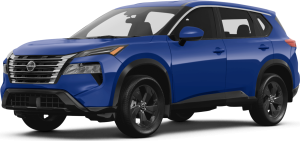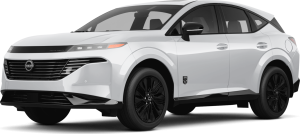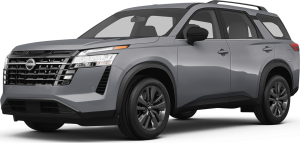

A guide to the 2026 Nissan Rogue AWD's capability on the unpaved roads around Manchester State Forest and Poinsett State Park. Learn how the Intelligent AWD system, 1.5-liter VC-Turbo engine, and five Drive Modes including Off-Road setting handle typical forest access roads, when the Rock Creek trim's Hill Descent Control and all-terrain tires become necessary, and what the Invisible Hood View camera system actually contributes to rural driving.
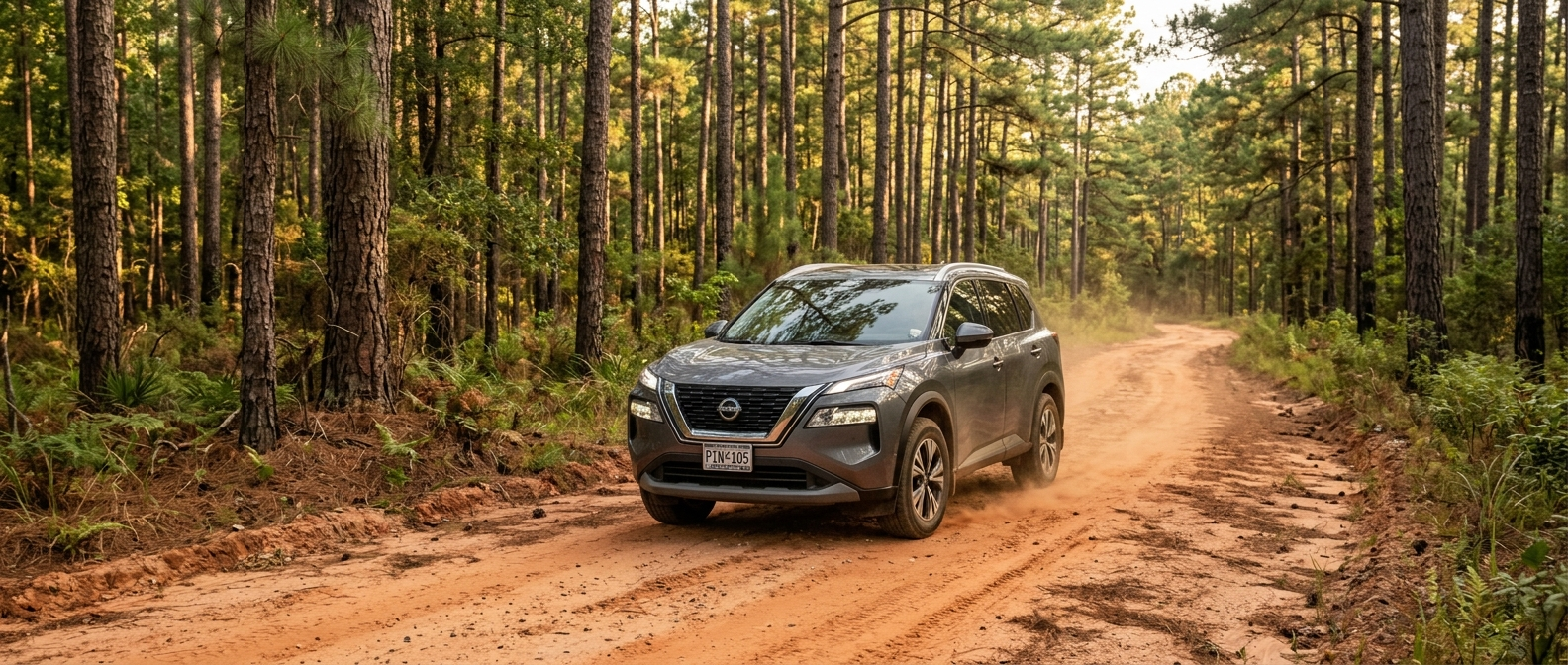
For the SC Midlands, the number that carries the most weight is that 8.2-inch ground clearance. Manchester State Forest runs many miles of unpaved dirt and sand roads, and the Palmetto Trail corridor accesses some the Palmetto Conservation Foundation describes as potentially deeply rutted in places. At 8.2 inches, the Rogue clears the rutted sand road and gravel campground lane you'll meet around Poinsett State Park's campground (which sits on packed dirt and gravel) without drama. That isn't truck clearance, but it's enough for what most Sumter County families are actually doing out there.
The 225 lb-ft of torque from the 1.5-liter VC-Turbo matters here too. Low-end torque is what pulls you through a soft sandy patch, not peak horsepower. Nissan's variable-compression engine adjusts its compression ratio between 8:1 and 14:1 to keep that torque on tap across a wide range, so the engine isn't straining when you ease off a loose dirt road apron.
Intelligent AWD: How It Reads the Road Before You Feel the Slip
The Rogue's system is more sophisticated than the name suggests, and this is the spot where buyers tend to get confused about what it's doing. Browse our current Rogue inventory to see which AWD trims are in stock, but the mechanical reality comes first. Nissan's Intelligent AWD doesn't run all four wheels all the time. Under normal, dry conditions, the system sends power to the front wheels and monitors sensors. The moment it reads a wheel-speed discrepancy that signals slip, it transfers torque rearward. That transfer happens fast enough that you'll feel nothing but grip. You don't engage it by hand. No dial to remember.
What you do control is the Drive Mode Selector. With AWD equipped, you get five modes.
- Auto: The default. Handles paved roads and light gravel without input from you.
- Eco: Softens throttle response to stretch fuel economy on long highway runs.
- Sport: Sharpens throttle for more responsive acceleration, useful on highway on-ramps.
- Snow: Adjusts the AWD calibration for low-traction surfaces, reduces wheelspin.
- Off-Road: Optimizes traction distribution for loose surfaces. This is the one you want when the sand gets deep.
That Off-Road mode is what separates the Rogue from most compact crossovers in this class. Flipping it before you turn onto a forest road takes about two seconds and changes how the system distributes power. Our advice is to engage it before the loose surface, not after you're already spinning.
The Tradeoff We Want You to Know Up Front
The standard AWD Rogue handles the gravel campground lanes at Poinsett State Park and the occasional forest access road on a dry or slightly damp day without complaint, and that's the plain answer. It's not the right vehicle for deep rutted trails, steep sustained descents on loose soil, or any road that a Jeep would need lockers for. The Rock Creek trim adds Hill Descent Control and off-road-tuned suspension for exactly the people who head into Manchester State Forest often rather than once in a while. Those all-terrain tires on the Rock Creek make a real difference on wet sand. If the forest roads are your Friday routine, not your twice-a-year camping trip, Rock Creek is the honest recommendation.
The fuel economy tradeoff with AWD is worth naming too. The EPA rates the standard AWD Rogue at 28 city and 35 highway versus 29 city and 36 highway for the front-wheel-drive version. That one mpg difference is negligible, and it's no reason to skip AWD if your driving takes you off-pavement around Sumter County.
Explore financing options if you're weighing Rock Creek against a standard AWD trim on budget.
What the Invisible Hood View Actually Does on Forest Roads
The Nissan Pathfinder gets more attention for its off-road credibility, yet the available 3D Around View Monitor with Invisible Hood View on the Rogue is quietly one of the most useful pieces of technology for rural road driving, and it almost never comes up in the standard conversation. The system stitches together camera feeds to give you a top-down view of the vehicle, and the "Invisible Hood" mode renders the front of the vehicle transparent on your display so you can see what the hood is covering. On a forest access road where you're inching past a rutted edge or crossing a shallow water bar, seeing exactly where your front tires sit relative to the obstacle is genuinely useful. It's no gimmick. Our team has watched customers discover it on a first trip into Manchester State Forest and immediately understand why it matters. On the lot it looks like a screen effect. On a tight sand road it looks like a superpower.
This feature is available on higher trims (SL and above, and Rock Creek). Worth factoring into your trim decision if you genuinely use the off-pavement capability.
Who the 2026 Rogue AWD Actually Fits
The Rogue AWD is the right vehicle for the Sumter County family that spends most of its time on paved roads but takes regular detours. The run down SC 261 toward Pinewood, a weekend at Poinsett State Park, an afternoon on the forest access roads of Manchester State Forest where the Palmetto Trail connects to the park. Standard AWD covers those scenarios with confidence. The payload-hauling, deeply rutted trail user needs something else.
Rock Creek is the specific answer for the buyer who heads into the forest more than a few times a year. The off-road suspension tuning, all-terrain tires, and Hill Descent Control close the gap between the Rogue's car-based platform and what those roads demand.
For the family at Shaw Air Force Base getting ready for a PCS and looking for a capable, practical SUV that doesn't require a truck-sized fuel budget, the AWD Rogue is a reasonable, efficient, capable choice. The EPA-estimated 31 combined mpg on AWD trims (or 28 city / 35 highway depending on driving style) keeps the running cost manageable for the long drives to Columbia or down toward the coast between tours.
Explore Your Financing Options
Both trims are on our lot right now. We're glad to walk you through the difference on a test drive, or get into the specifics of which access roads you have in mind so we can point you at the right trim.
Frequently Asked Questions
Does the 2026 Nissan Rogue AWD work on dirt and sand roads like those in Manchester State Forest?
Yes, with the right expectation set. The 2026 Rogue's Intelligent AWD system transfers torque to the rear wheels when sensors detect slip, and the Off-Road drive mode adjusts power distribution for loose surfaces like sand and soft dirt. At 8.2 inches of ground clearance, it handles typical forest access roads and campground lanes around Manchester State Forest and Poinsett State Park. Deeply rutted trails or sustained steep descents are better suited to the Rock Creek trim, which adds Hill Descent Control and all-terrain tires.
Is the Rogue Rock Creek AWD worth it over a standard AWD trim for rural SC driving?
If you go off-pavement often, yes. The Rock Creek adds Hill Descent Control, off-road-tuned suspension, and all-terrain tires that make a genuine difference on wet sand and loose soil compared to the standard all-season setup. Standard AWD trims handle occasional gravel and packed-dirt campground roads well. The Rock Creek is for the buyer who treats those roads as routine, not an occasional detour.