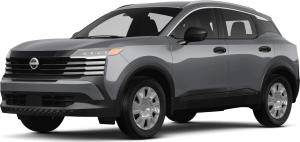

Since USC Sumter is a commuter campus, picking the right used car is crucial for handling daily drives along Broad Street and US-378. Explore our year-by-year buyer's guide for the Nissan Sentra to learn which model years deliver the best value, fuel economy, and safety tech—and which older generations require extra inspection before you buy.
USC Sumter has no on-campus housing, and that one fact changes every car conversation here. You're commuting, full stop. So a used Sentra is more than a budget purchase. It's a car that will pile up real miles on Broad Street, on US-378 heading toward Columbia, and through the stop-and-go of getting to an 8 a.m. lecture five days a week. Pick the wrong model year and you're gambling on a transmission repair bill that rivals a semester of tuition. Pick the right one and you've got 30-plus miles per gallon, standard safety tech, and a car that earns its keep.
The short version is that the 2020 redesign is the dividing line, and everything built after it is a fundamentally different car than what came before.
Browse our current pre-owned Sentra inventory to see what years and trims we have available right now.
- Sweet spot: 2021-2024 (eighth generation, revised CVT, Nissan Safety Shield 360 standard on every trim, Apple CarPlay/Android Auto on all trims from 2021 onward)
- Solid runner-up: 2020 (redesign year; new 2.0L engine with 25 more hp over the outgoing model; improved CVT reliability, just verify CarPlay is on SV trim or higher)
- Years to approach carefully: 2013-2019 (documented CVT concerns; Nissan issued a TCM reprogramming campaign for 2013-2014; the 2019 carries some lingering CVT carry-over concerns)
- Years to skip: 2013-2014 specifically (NHTSA campaign PM562 covered CVT reprogramming; the 2013 carries the most documented complaint history in the nameplate's recent run)
- The commuter math: the EPA rates the 2020-2024 Sentra at roughly 29-32 mpg combined, meaningful on a daily Sumter-area drive when you're watching every dollar
Which Sentra years are the sweet spot for a used buy?
Usually the 2021-2024 model years are where we'd point a USC Sumter student first, and the tradeoff is a slight price premium over a 2020, since those cars carry the sorted-out CVT and the standard connectivity we'd want a commuter to have. The 2020 redesign is what made this generation worth buying used, and the 2021 update made it even cleaner. Nissan added standard Apple CarPlay and Android Auto across every trim level that year, so you're not hunting for the right package. The EPA rates the eighth-generation Sentra's combined fuel economy in the 29-32 mpg range. On a daily commute through Sumter's surface streets, that matters more than it sounds.
The 2024 model year added a revised CVT and an auto start/stop system that nudged efficiency slightly higher. Find a clean one in the pre-owned market and it's worth the modest premium over a 2021.
| Model Year Range | Sweet Spot? | Years to Watch | Why It Matters for a Commuter |
|---|---|---|---|
| 2021-2024 | Yes | None documented as systemic | Standard Safety Shield 360; CarPlay/Android Auto on all trims (2021+); 29-32 mpg combined (EPA); 2024 CVT update adds efficiency |
| 2020 | Yes (with a check) | Verify trim. Base S skips CarPlay. | Redesign year; new 2.0L at 149 hp; fixed prior engine; improved CVT; solid choice if budget is tight |
| 2017-2019 | Proceed with caution | Residual CVT complaints in NHTSA data; 2019 still carries some concerns | Pre-redesign platform; tech package is dated; CVT lineage from the 2013-era design |
| 2015-2016 | Proceed with caution | CVT shudder complaints in NHTSA filings; airbag recall history | Marginal safety tech; no automatic emergency braking standard |
| 2013-2014 | Skip | NHTSA campaign PM562 (CVT TCM reprogramming); 2013 carries the most documented complaints in modern Sentra history | High documented failure risk; not worth the savings for a daily driver |
The IIHS tested the 2020-2023 Sentra as a group, and those ratings apply to that whole generation, worth knowing if a parent is co-signing and safety ratings matter to the conversation.
Which years should you watch out for?
You'll want to skip 2013 and 2014 outright, and treat 2015-2019 as buy-with-an-inspection rather than an automatic no, because the CVT trouble that dogged the seventh generation eased over those years without fully going away. Nissan's own service campaign PM562 required a CVT transmission control module reprogramming on 2013-2014 Sentras, documented directly by NHTSA. The 2013 accumulated more complaints in NHTSA's database than any other Sentra in the modern era. Owners reported shuddering, stalling during acceleration, and sudden power loss. You don't want that kind of failure on US-378 at highway speed, or merging onto a busy road in Sumter with a car behind you.
The 2015-2019 window is more nuanced. Nissan made incremental CVT improvements across those years, but the underlying transmission architecture carried over from the troubled 2013 generation. The 2019 still drew lingering CVT-related complaints in NHTSA's database. On a test drive, hold a pre-2020 Sentra at a steady speed through the stop-and-go on Broad Street and feel for any shudder as the CVT settles into its ratio. A tired seventh-generation transmission shows itself right there.
Get a pre-purchase inspection at a certified Nissan shop if you're shopping that range. Pull the VIN on the NHTSA recall database yourself, and check that any open campaigns have been completed. Schedule a pre-purchase inspection with our service team before you commit. It's a straightforward check, and it protects you.
Schedule a Pre-Purchase Inspection
See available Sentras on our lot
How the Sentra's generations actually stack up
Two very different cars wear the Sentra name in the used market right now, split cleanly by the 2020 redesign, and the older one is cheaper for a reason while the newer one costs a little more for genuine mechanical peace of mind. The seventh generation ran from 2013 to 2019. Nissan's eighth generation began with the 2020 model year.
The seventh generation (2013-2019) was built around a 1.8-liter engine and the CVT that gave the nameplate so much grief. Its cabin tech aged quickly. Automatic emergency braking didn't become standard on most trim levels until 2018. Park a 2016 Sentra next to a 2021, and the difference in cockpit feel is substantial.
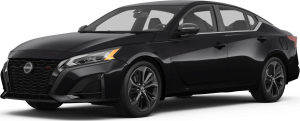
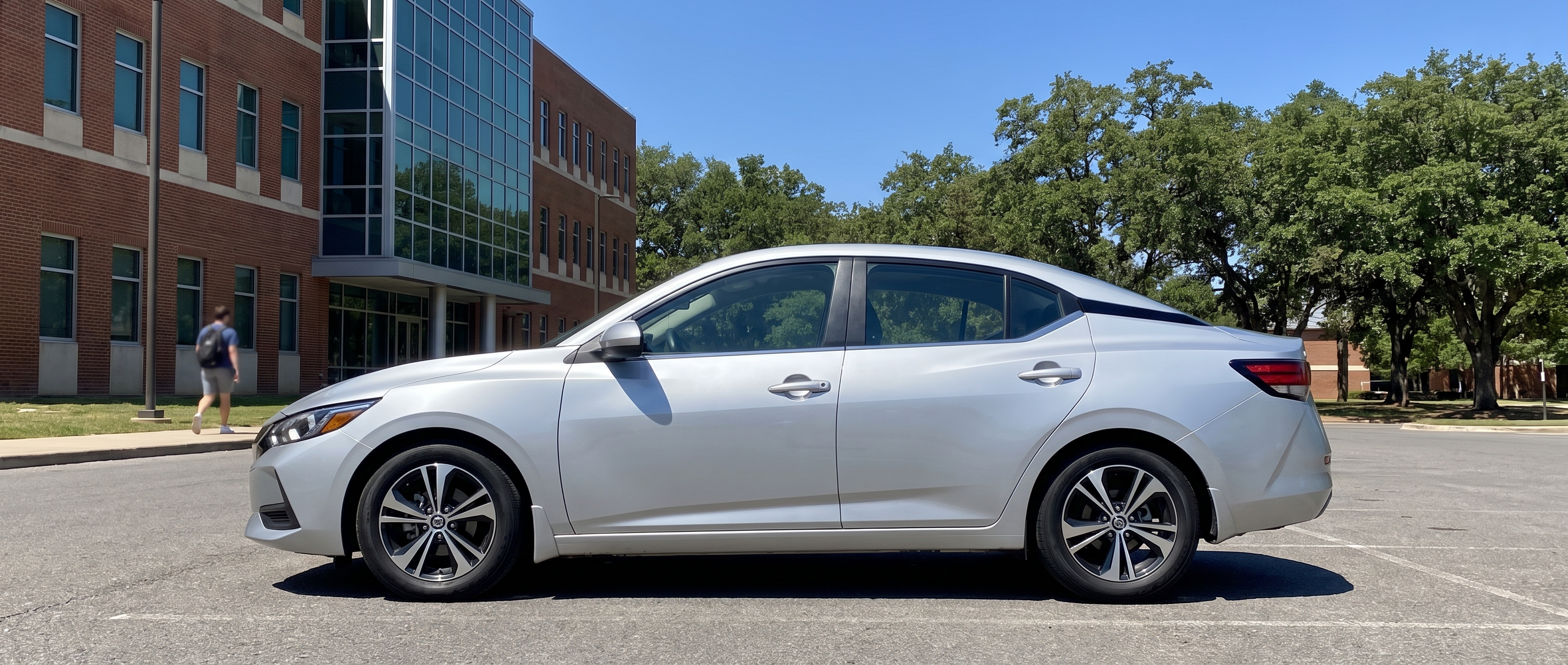
The eighth generation (2020-2025) is a ground-up redesign. The 2.0-liter engine produces 149 horsepower (25 more than the outgoing 1.8L), and the revised CVT addressed the shudder and stall complaints that defined the prior generation. Nissan Safety Shield 360 (automatic emergency braking with pedestrian detection, blind spot warning, rear cross traffic alert, lane departure warning) is standard on every single trim. Safety Shield 360 isn't a package or an upgrade. It comes on the base S.
Explore financing options for a used Sentra
For a student balancing coursework, a job, and a commute, that safety suite is genuinely relevant. Sumter's surface streets and the US-378 corridor to Columbia both involve the kinds of distracted-driving scenarios where automatic emergency braking earns its keep.
Which year is right for which buyer?
Not everyone shopping for a used Sentra near Sumter is in the same situation, so the right year comes down to your budget and how far you drive, and a post-2020 car still beats a cheaper pre-2020 one for most commutes. Walk through it by situation.
The first-car buyer on a strict budget. If the 2020-2021 range fits your budget and you're choosing between a high-mileage 2020 and a lower-mileage 2018, take the higher-mileage 2020. The redesigned platform is worth the tradeoff, and you're not inheriting the seventh-generation CVT headaches.
The student who drives Columbia and back a few times a month. The 2021-2024 SV trim is the practical pick. It has Apple CarPlay and Android Auto standard (no option-hunting required), Nissan Safety Shield 360 standard, and the EPA's 29-32 mpg combined estimate holds up on real highway miles. Shaw AFB families shopping for a dependent heading to USC Sumter tend to land here, a practical, verifiable choice with documented reliability.
The buyer who found a clean 2017 at a compelling number. We won't tell you it's a terrible car. Kept up, it can run reliably. But get that pre-purchase inspection first, verify all open recalls are closed, and budget for the chance that the CVT needs attention sooner than on an eighth-gen. The pre-2020 CVT is a real liability. Eyes open.
The student transferring to USC Columbia after two years. The eighth generation Sentra holds up well at 100,000-plus miles when maintained. Nissan's own documented service data points to the platform being designed for longevity when the CVT fluid schedule is followed. Buy it now and sell it in two years, and the 2021-2023 range is likely to retain enough value to make the swap work. The 2013-2014 range is not.
Frequently Asked Questions
Is the Nissan Sentra CVT reliable?
It depends entirely on the generation. The 2013-2019 Sentra used a CVT that piled up significant NHTSA complaint volume, and Nissan's own service campaign PM562 required a transmission control module reprogramming on 2013-2014 models specifically. The 2020 redesign brought a revised CVT that addressed those documented shudder and power-loss concerns. From 2020 onward, the reported CVT complaint rate dropped substantially. If someone tells you "Sentras have CVT problems," they're describing the seventh generation, not the current eighth generation or the new ninth-generation 2026 model.
Does a used Sentra make sense for commuting to USC Sumter?
A used Sentra is a strong fit for this specific campus. USC Sumter has no on-campus housing, so every student commutes. The eighth-generation Sentra's fuel economy (the EPA rates the 2020-2024 models in the 29-32 mpg combined range) and its standard safety suite make it well-suited to daily Sumter-area driving and the occasional run out to Columbia on US-378. The trunk is a genuine 14.3 cubic feet, enough for a week's worth of textbooks without playing cargo Tetris.
What trim should I buy in a used 2020-2024 Sentra?
The SV trim is where the value lands for most students. The base S trim on 2020 models skips Apple CarPlay and Android Auto, which matters if you're navigating campus and leaning on your phone for directions and streaming. From the 2021 model year forward, Nissan made CarPlay and Android Auto standard across all trims including the S. So on a 2021 or newer, even the base S gives you the full connectivity package. The SR adds sport-tuned suspension and upgraded wheels (nice, but not the priority for a commuter use case).